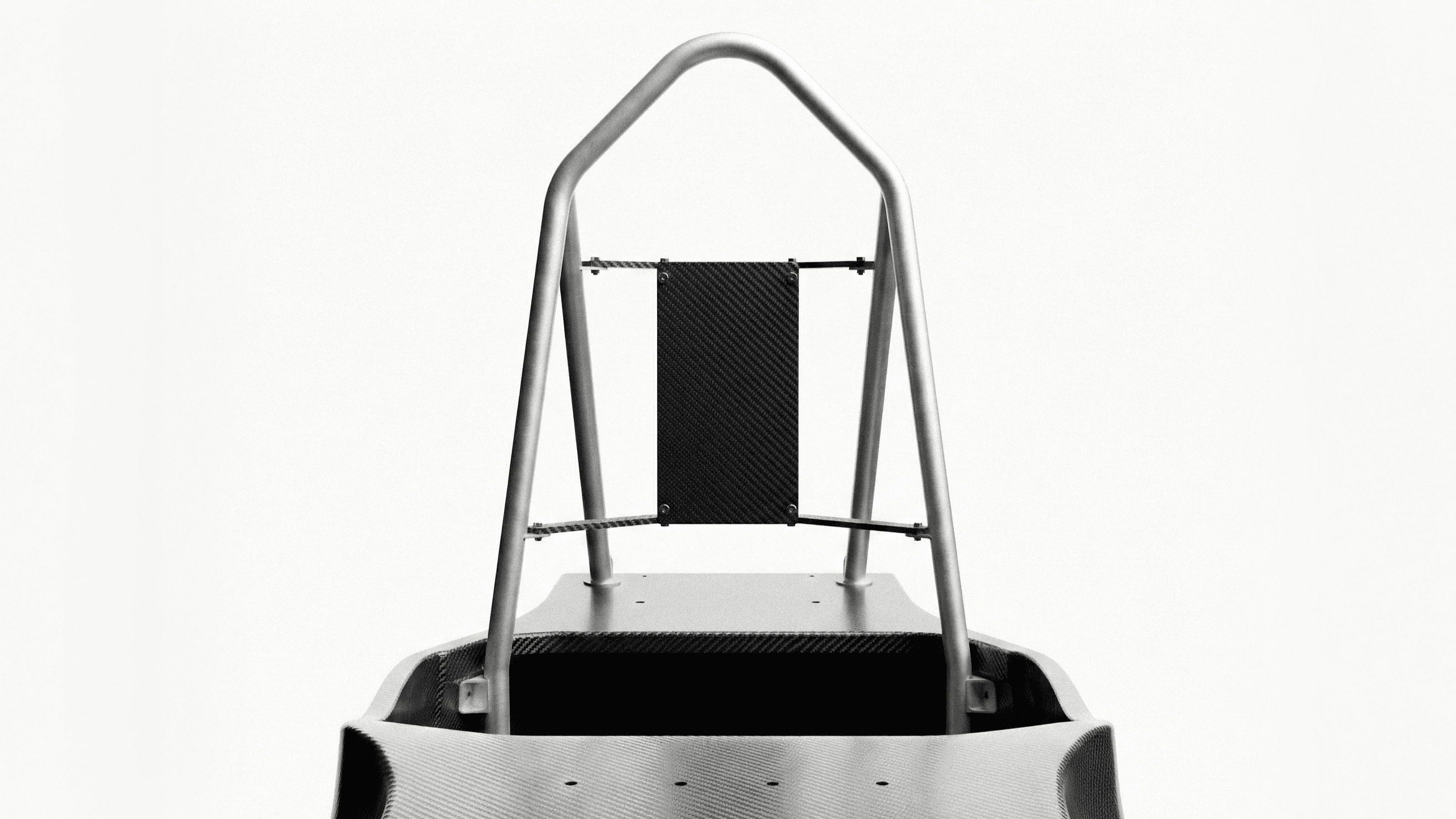
Headrest
Overview
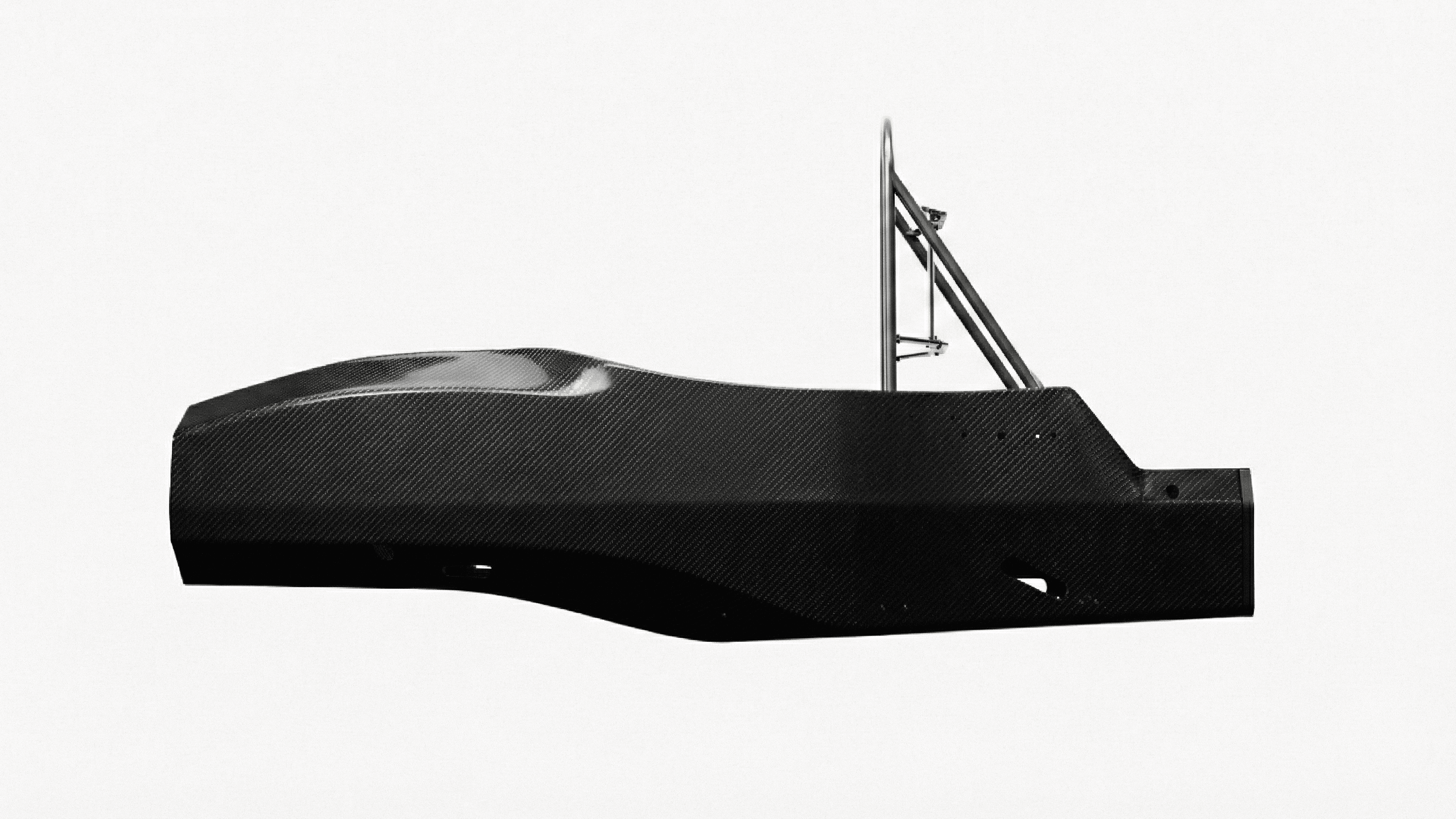
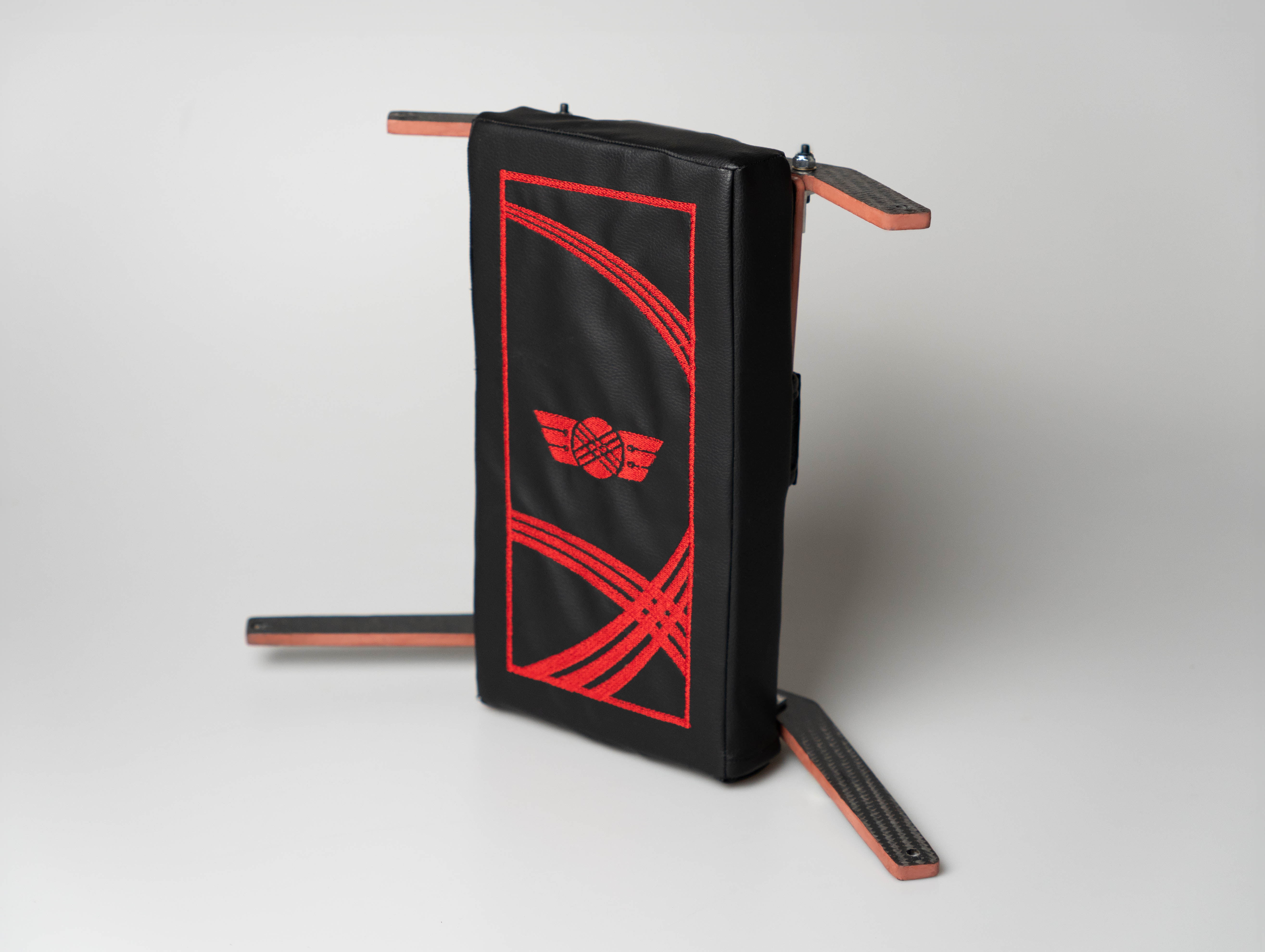
A safety component of the FSAE Driver Interface system. As one of the few industrial designers in an engineering club, I was tasked with leading the complete redesign of the carbon fiber headrest structure.
Timeline
36 weeks
Fall 2025
Skills
Design for Disassembly and Repairability
Design for Manufacturing
ANSYS Finite Element Analysis (FEA)
RAMSIS Ergonomics Simulation
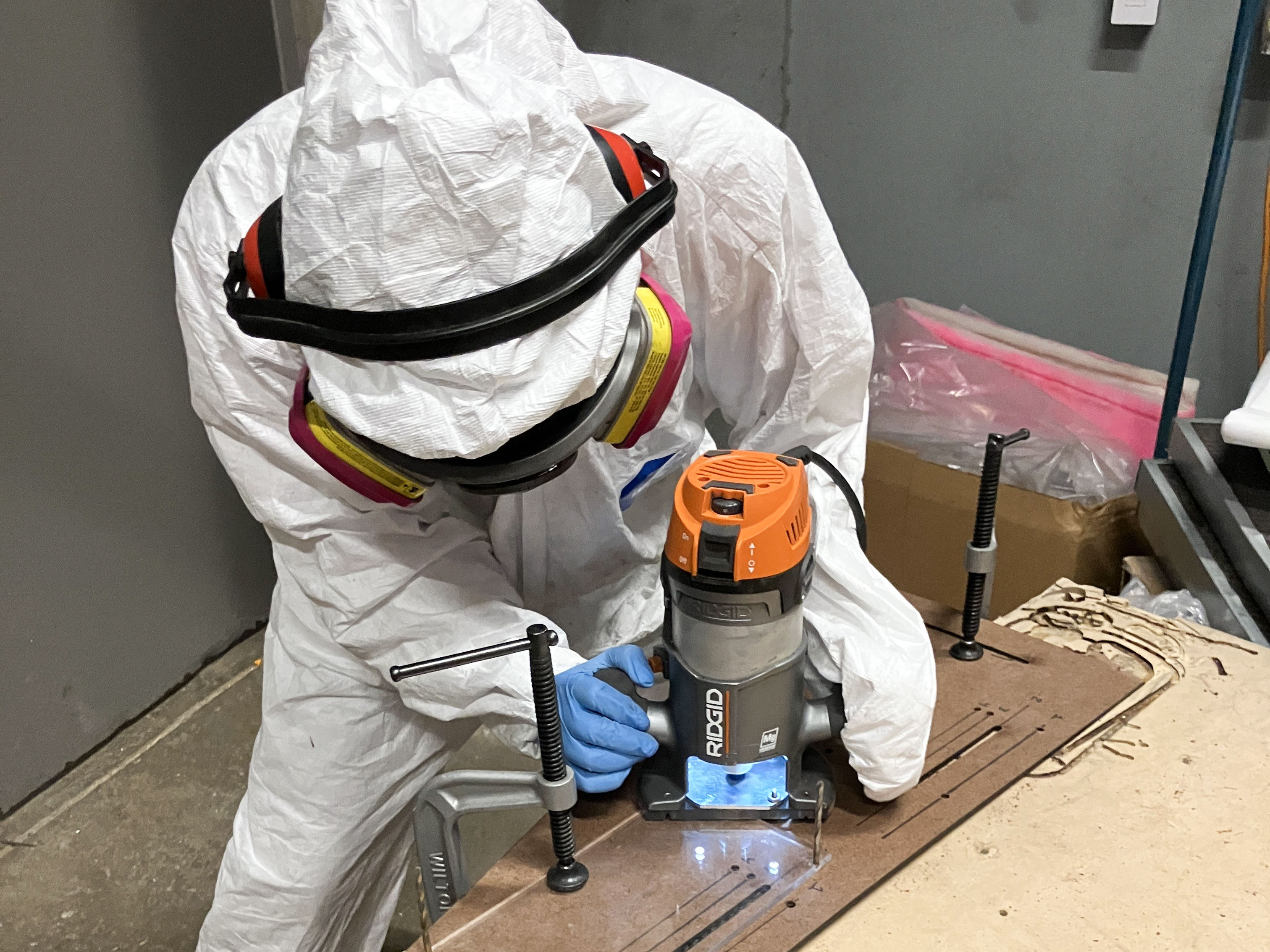
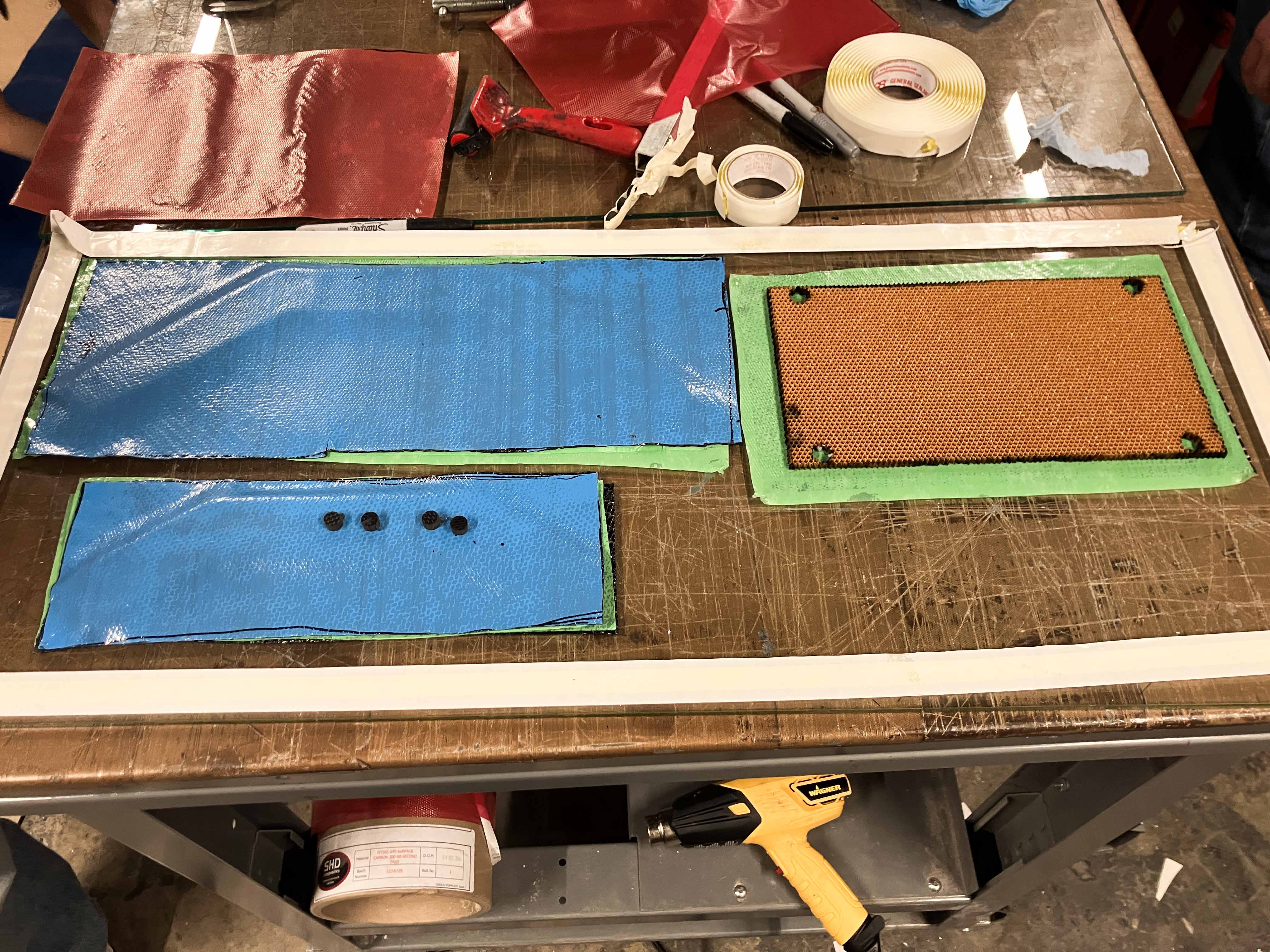
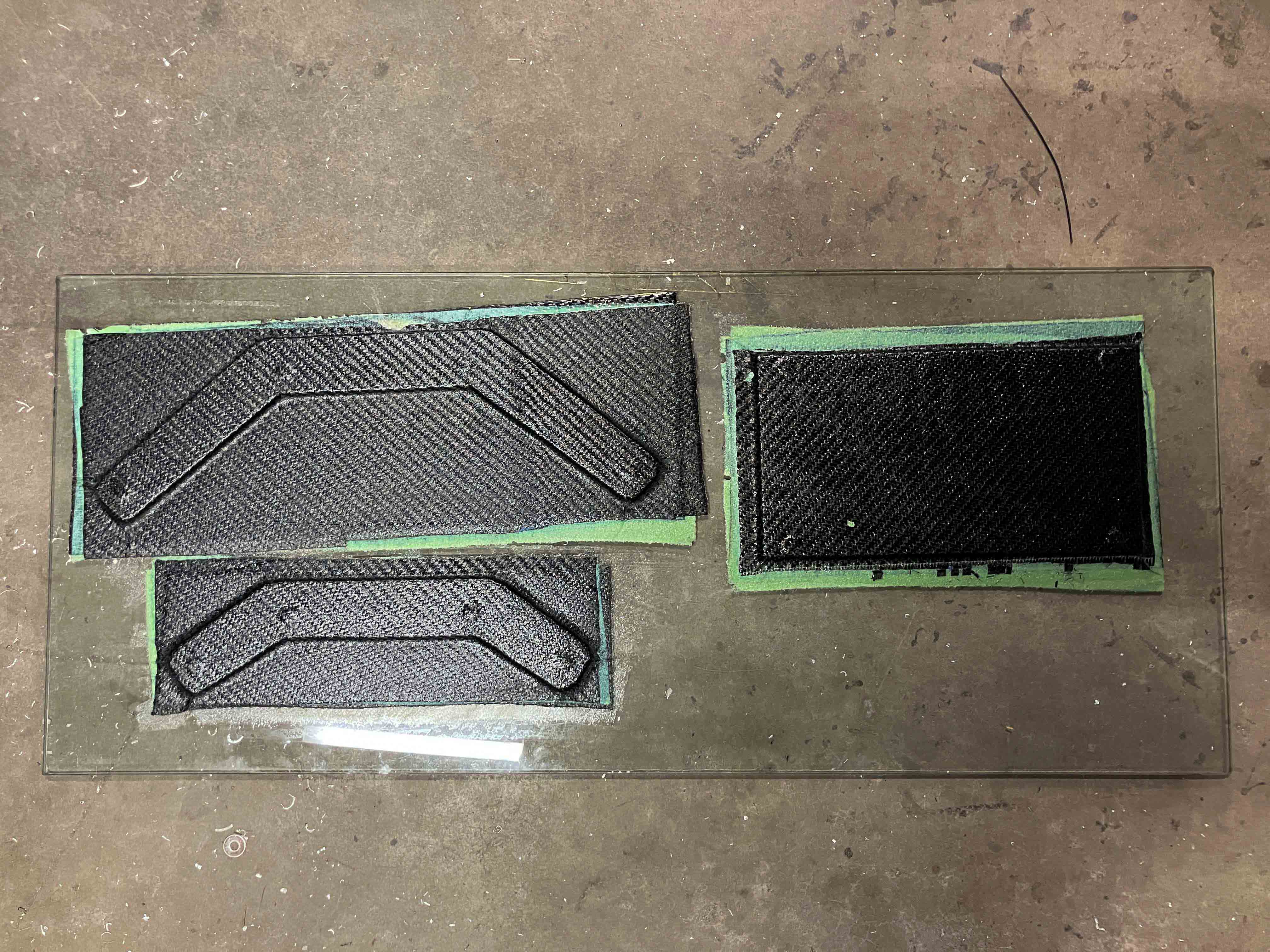
Composite Layup
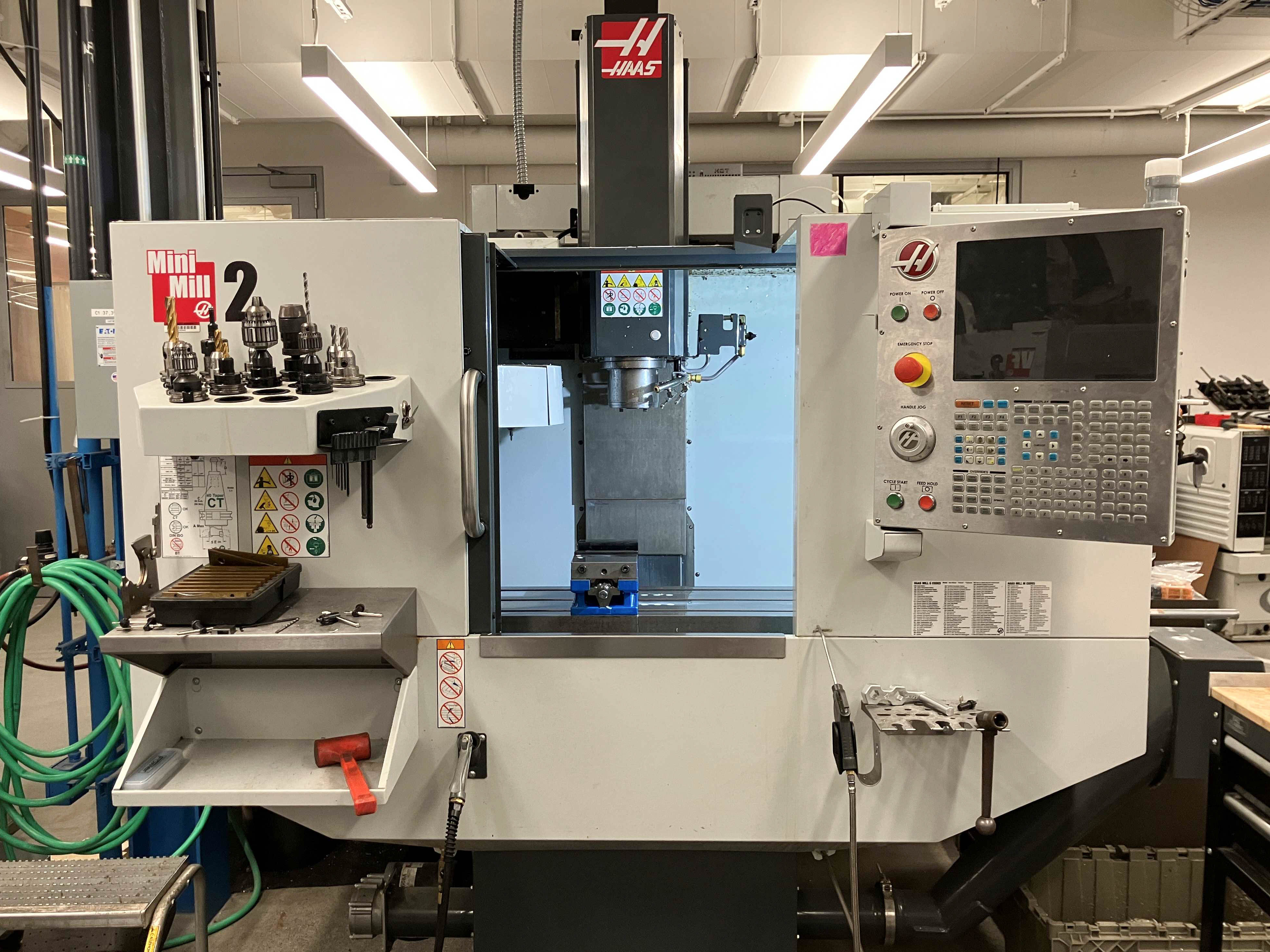
Machining
User Testing
Ultra Lightweight
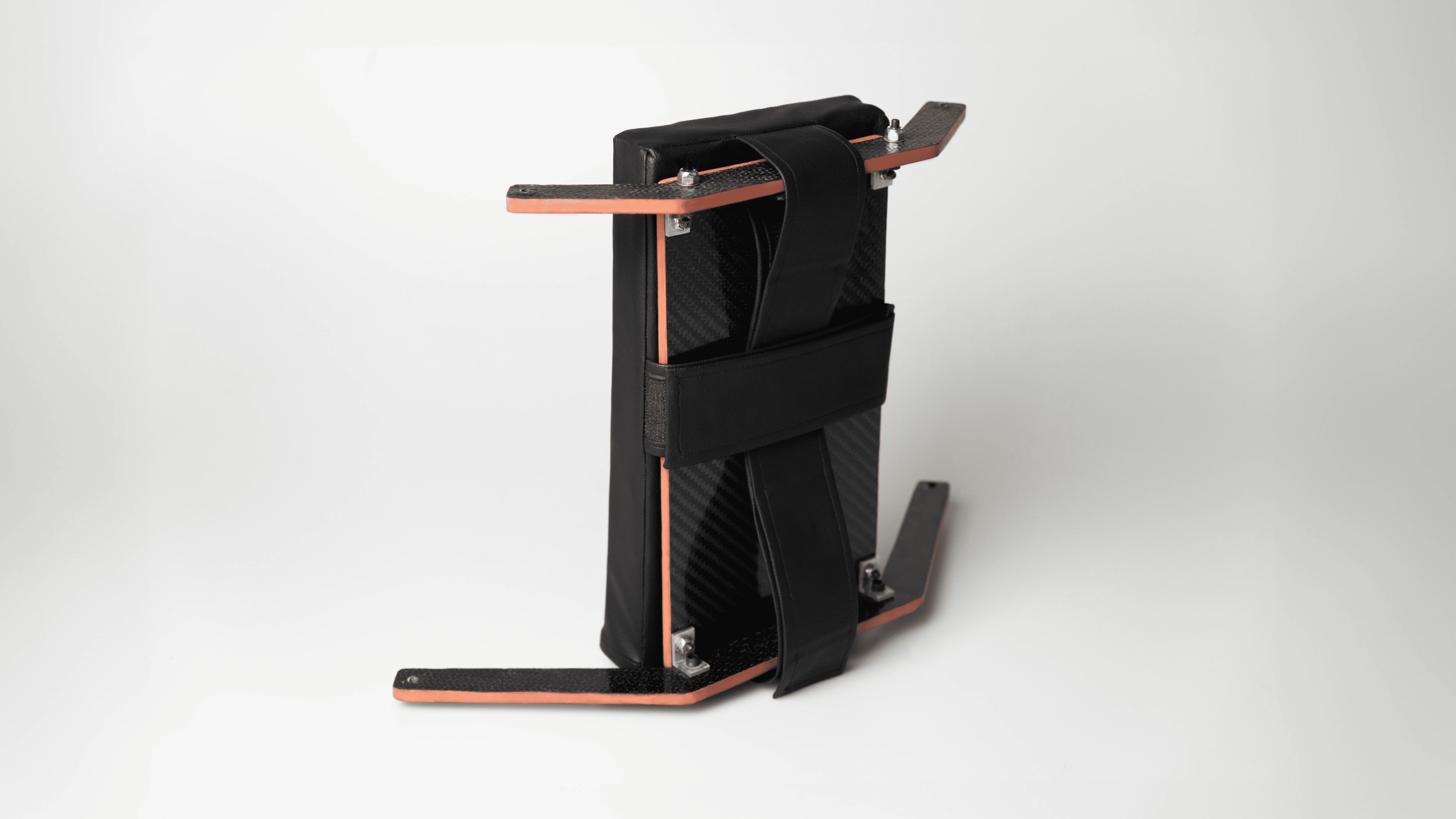
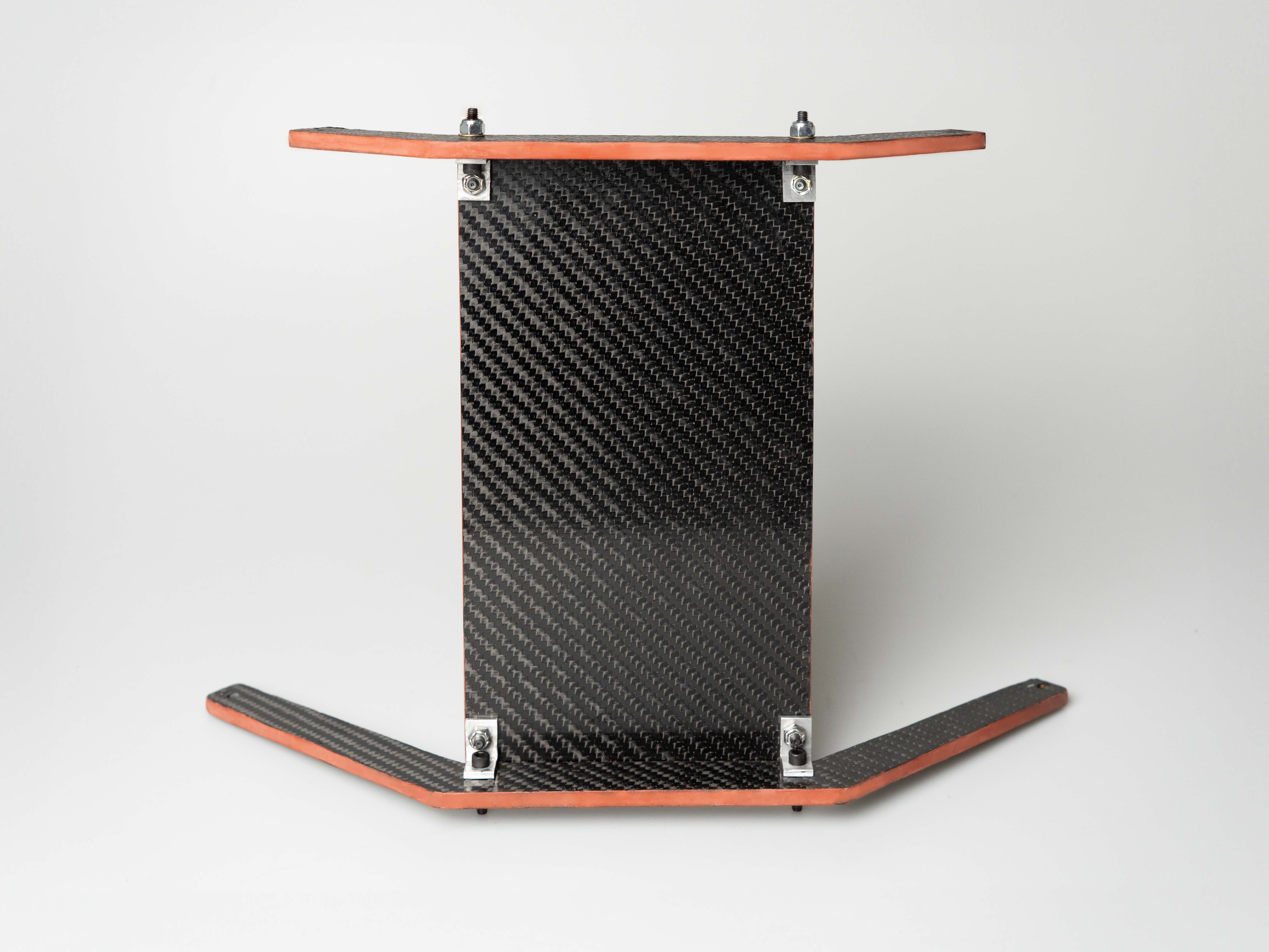
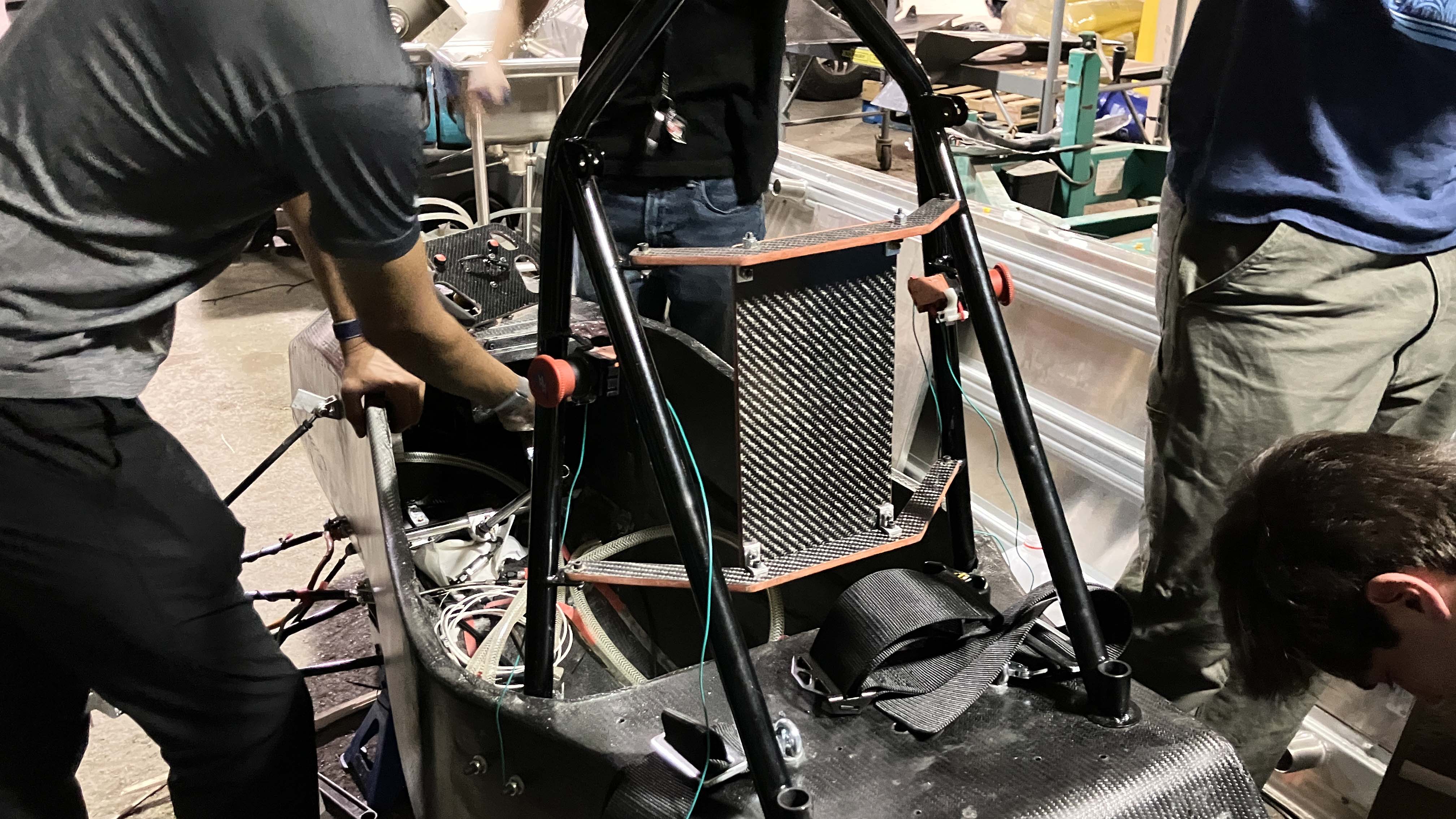
The entire headrest system weighs just 254 grams, a significant weight reduction compared to wet carbon or aluminum alternatives. Pre-impregnated carbon fiber combines exceptional strength with minimal weight—crucial for maximizing on-track performance.
Rigorously Tested
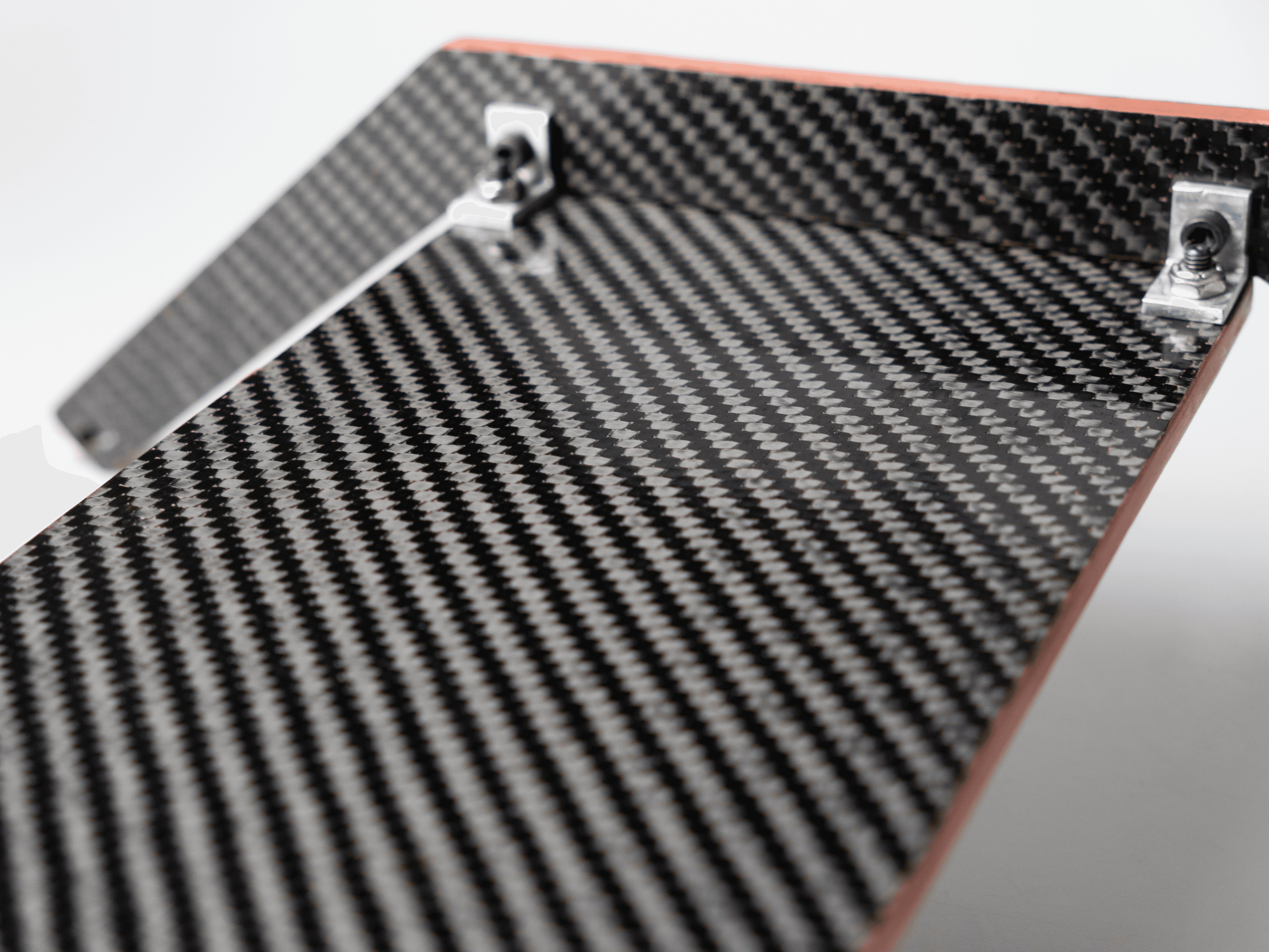
Fully rules compliant and designed to meet all safety regulations, the headrest system withstands up to 900 N of force in the rearward direction, and 300 N in the lateral and vertical direction, validated in both ANSYS Mechanical and during physical strength testing.
Designed for easy on-track maintenance
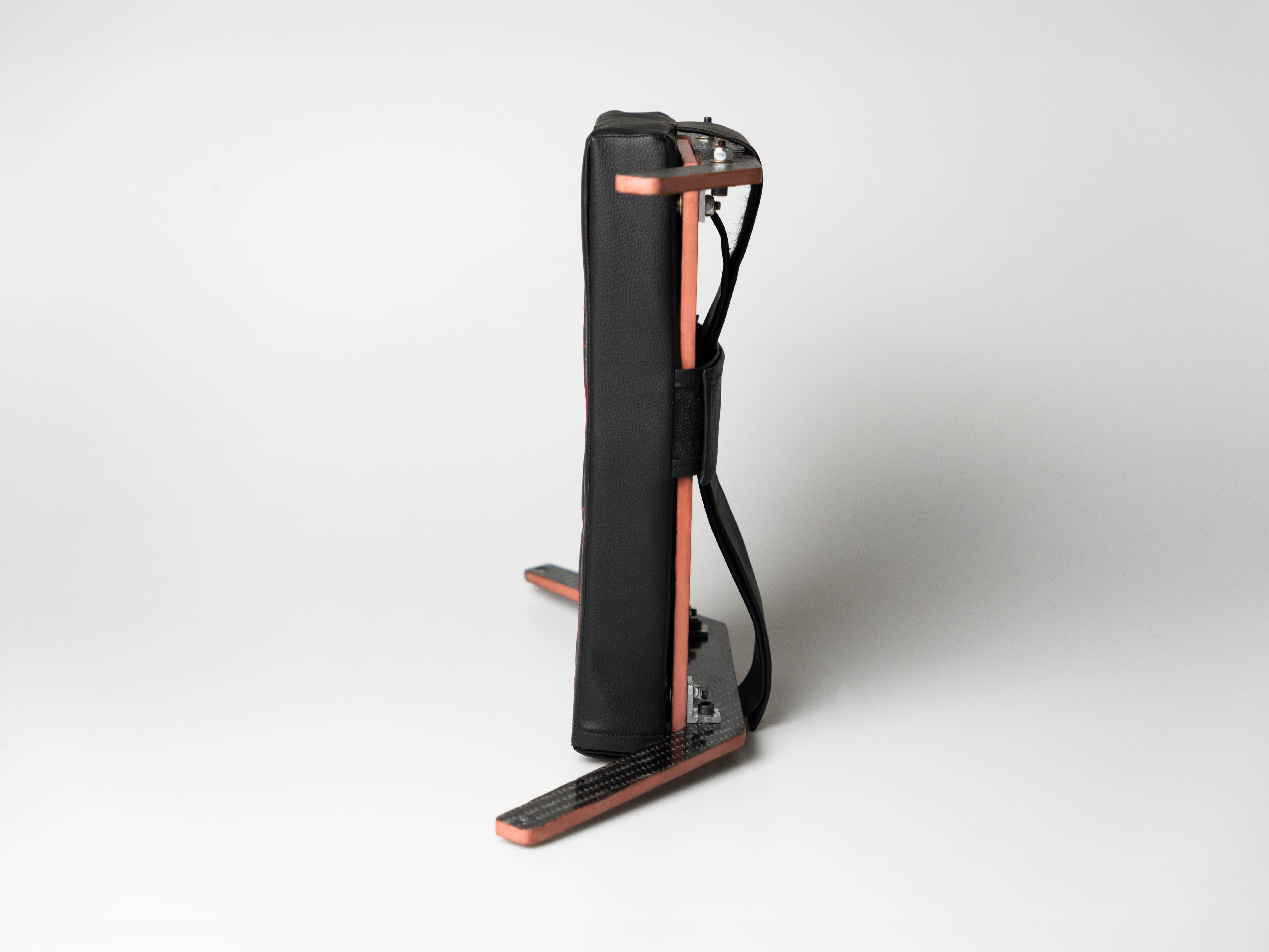
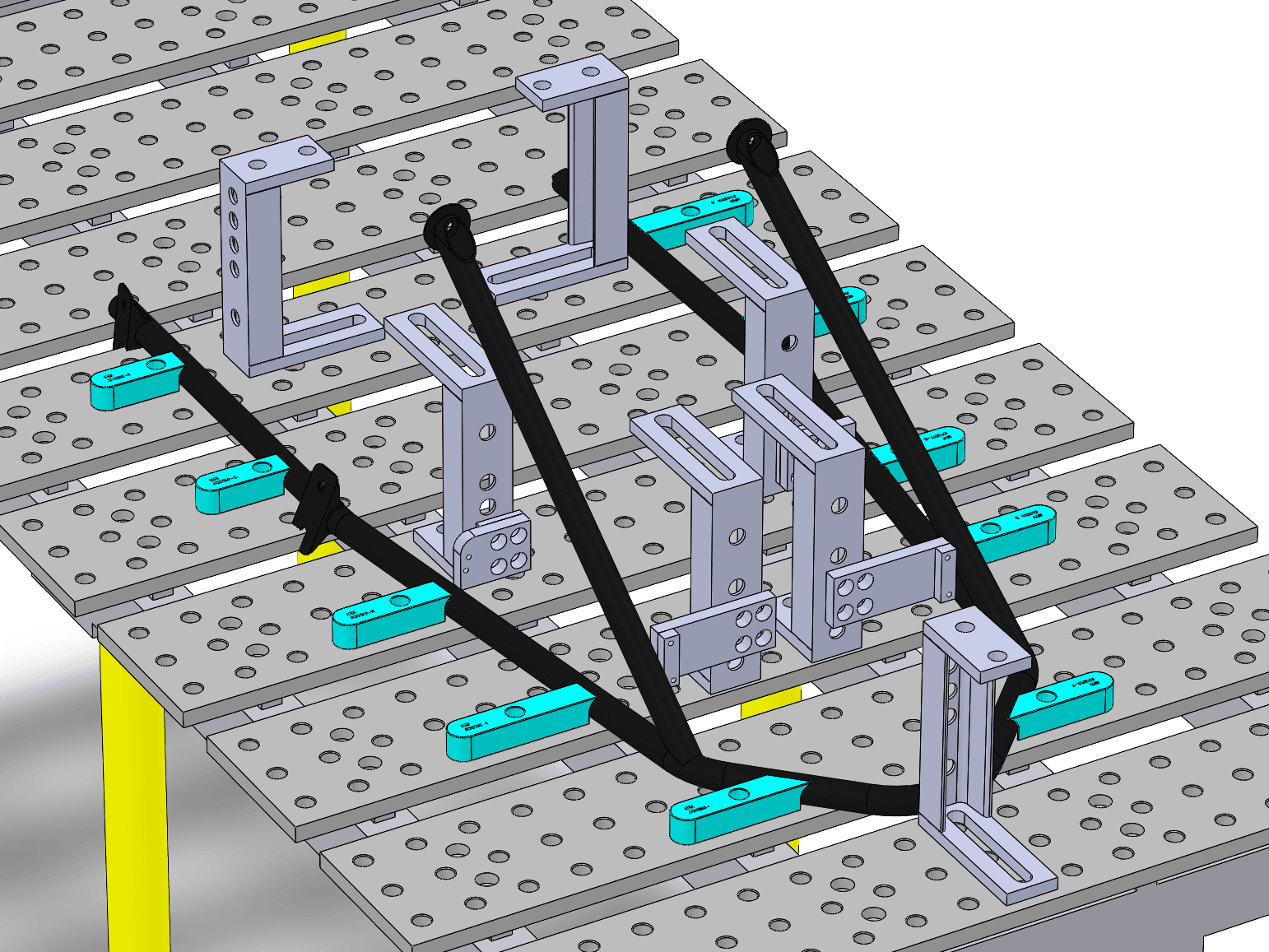
Repairability and serviceability is crucial when designing for a component that withstands wear and tear on the track. The disassembly process is very simple and allows for easy part replacement.

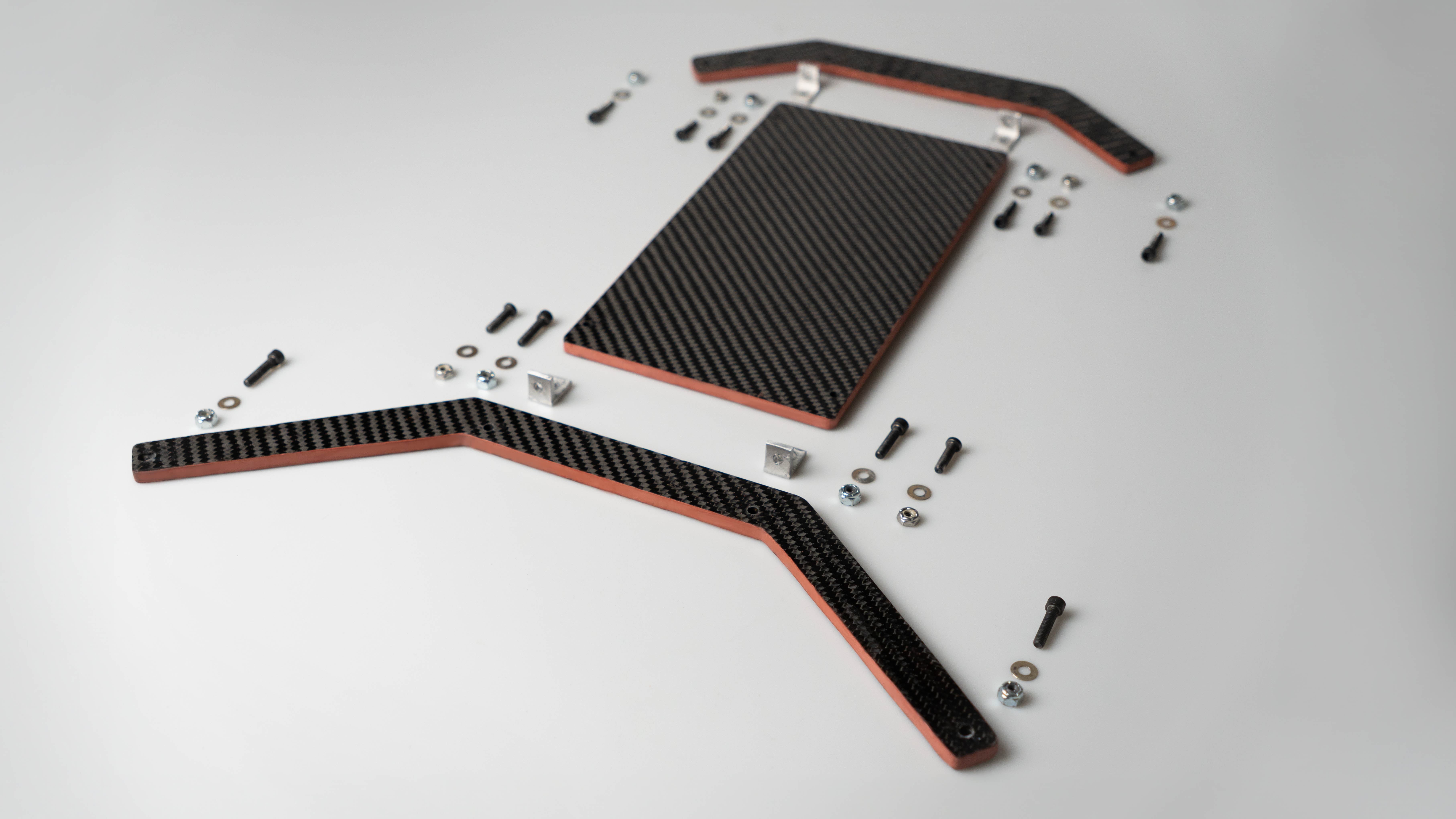
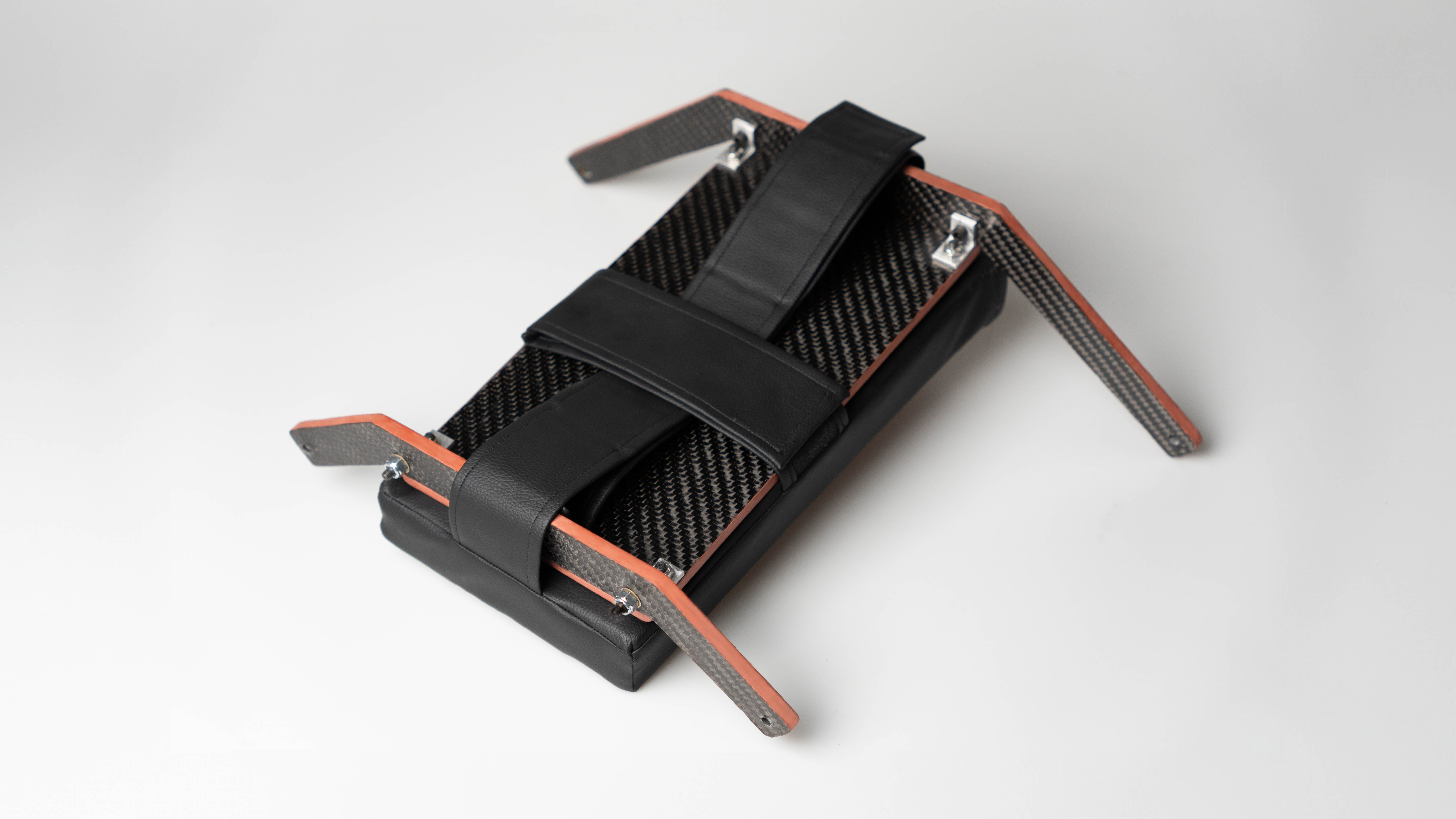
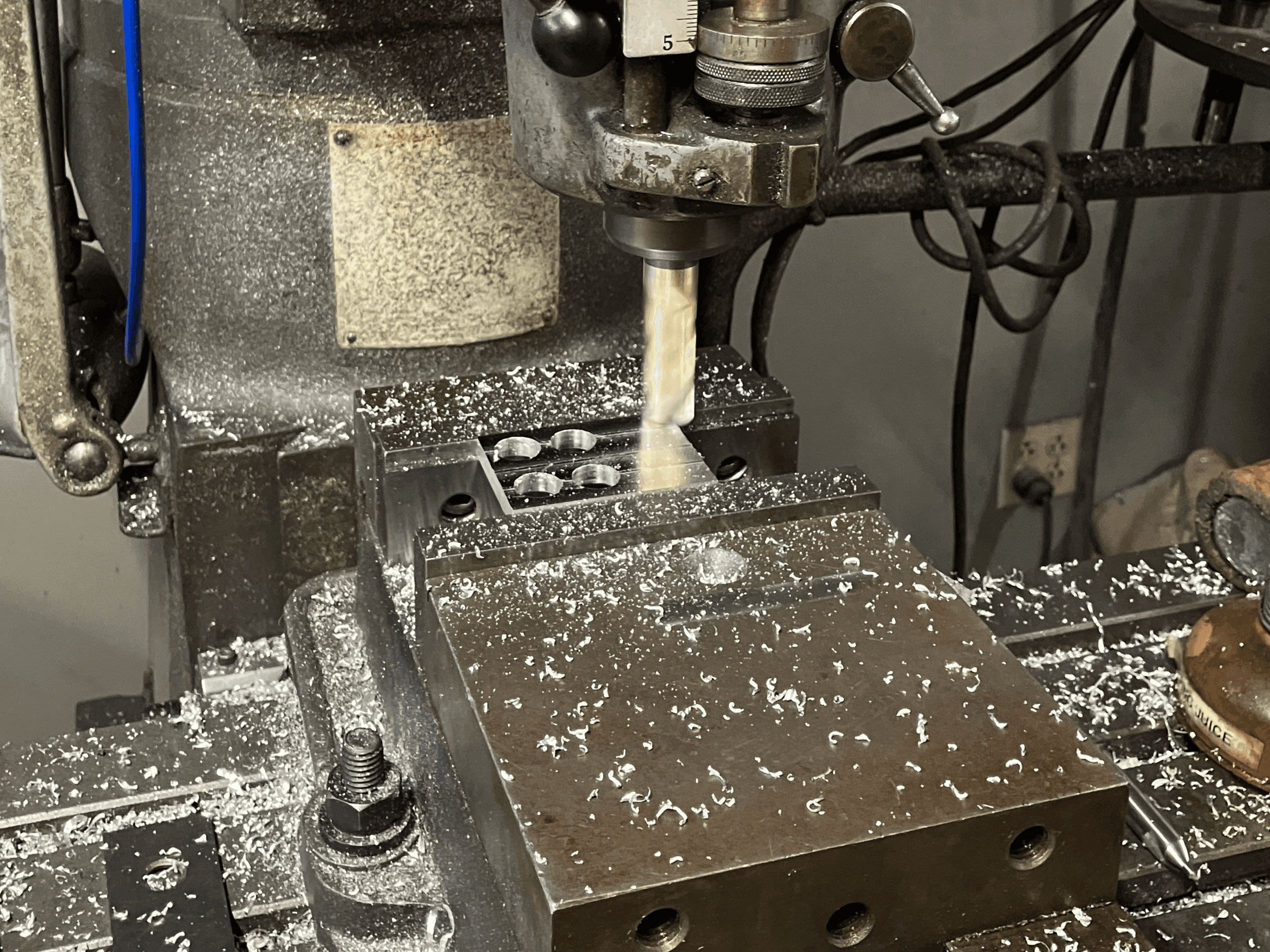
I collaborated closely with interdisciplinary teams, learned ANSYS Mechanical FEA, and applied DFM principles while working with pre-impregnated carbon fiber, an entirely new material for this particular application.
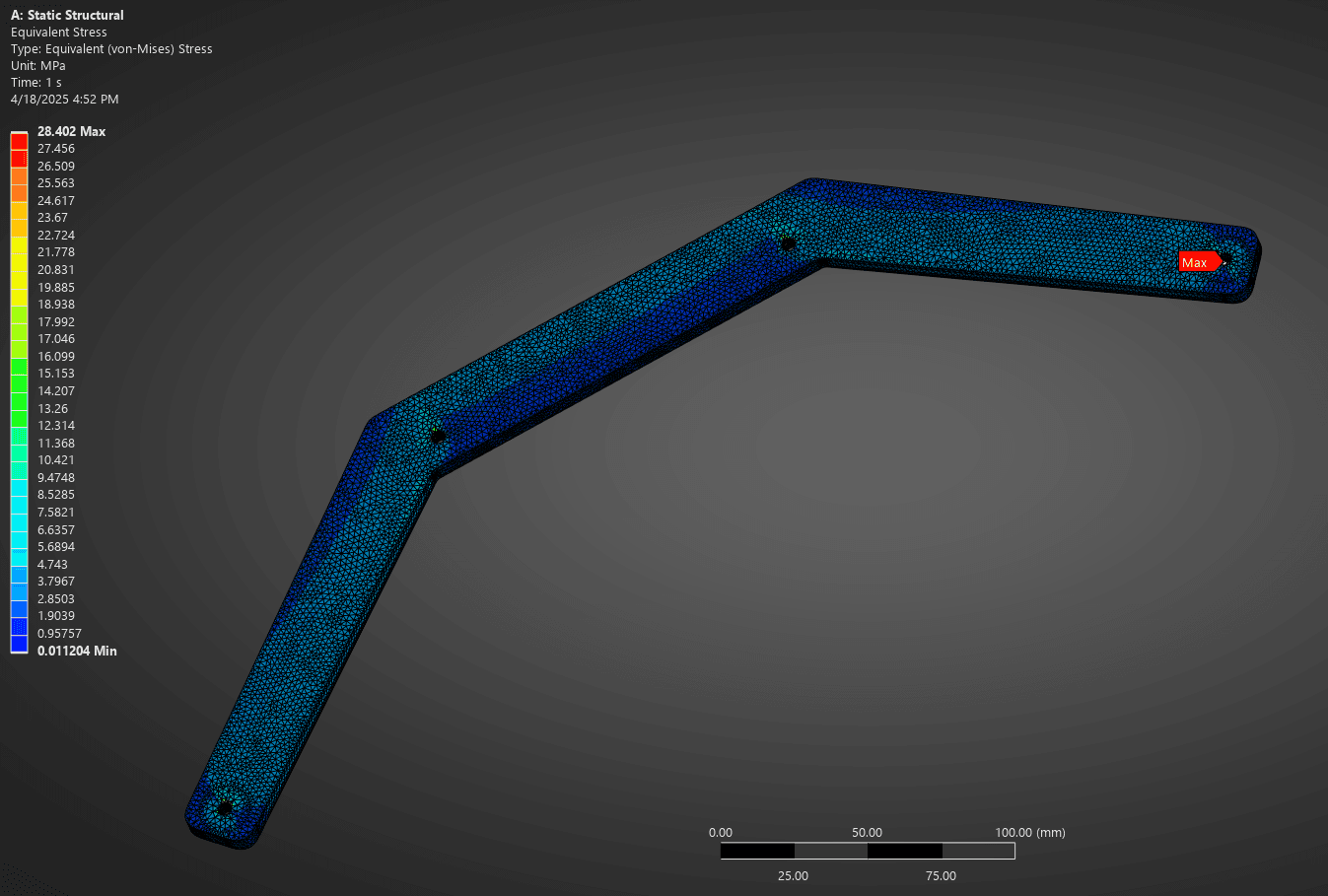
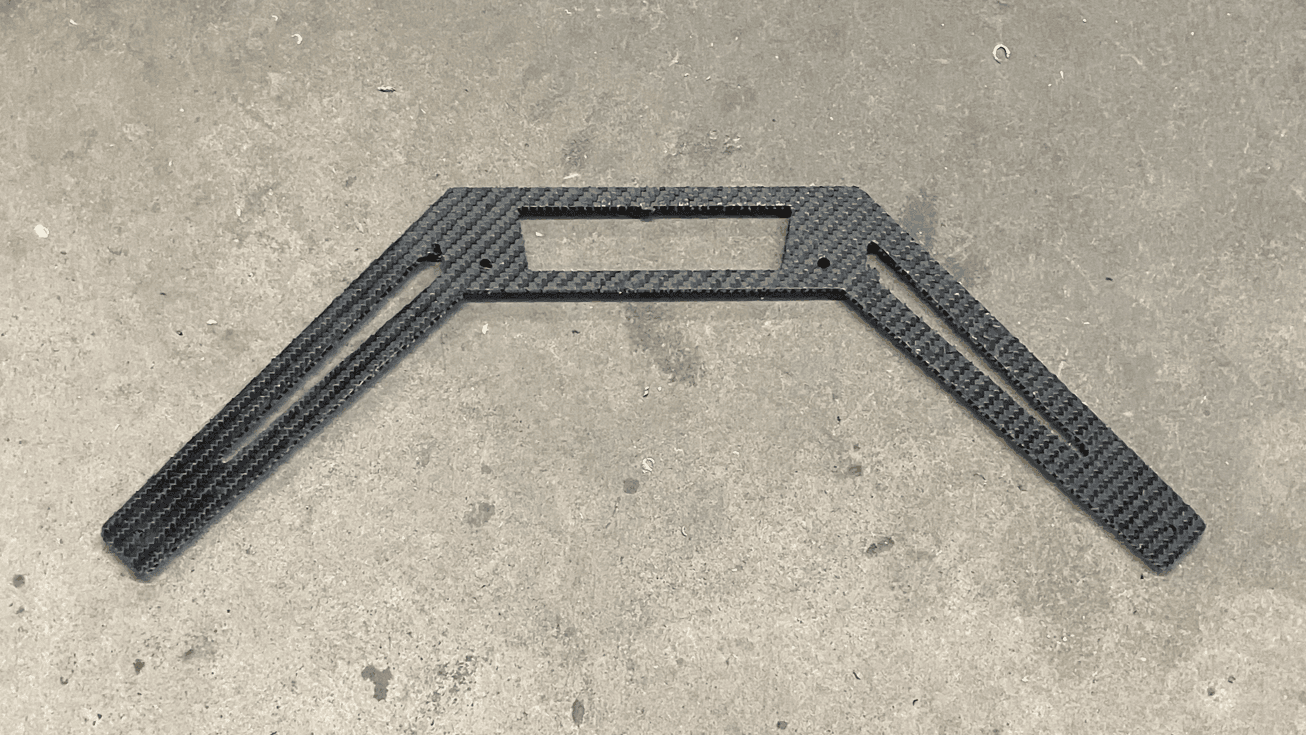
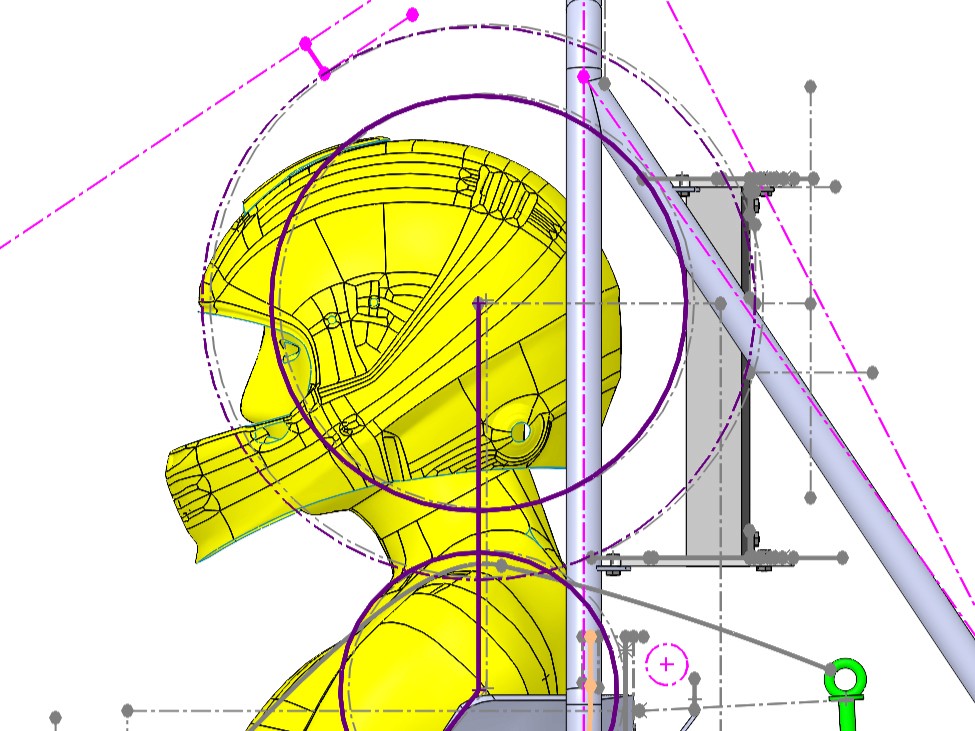
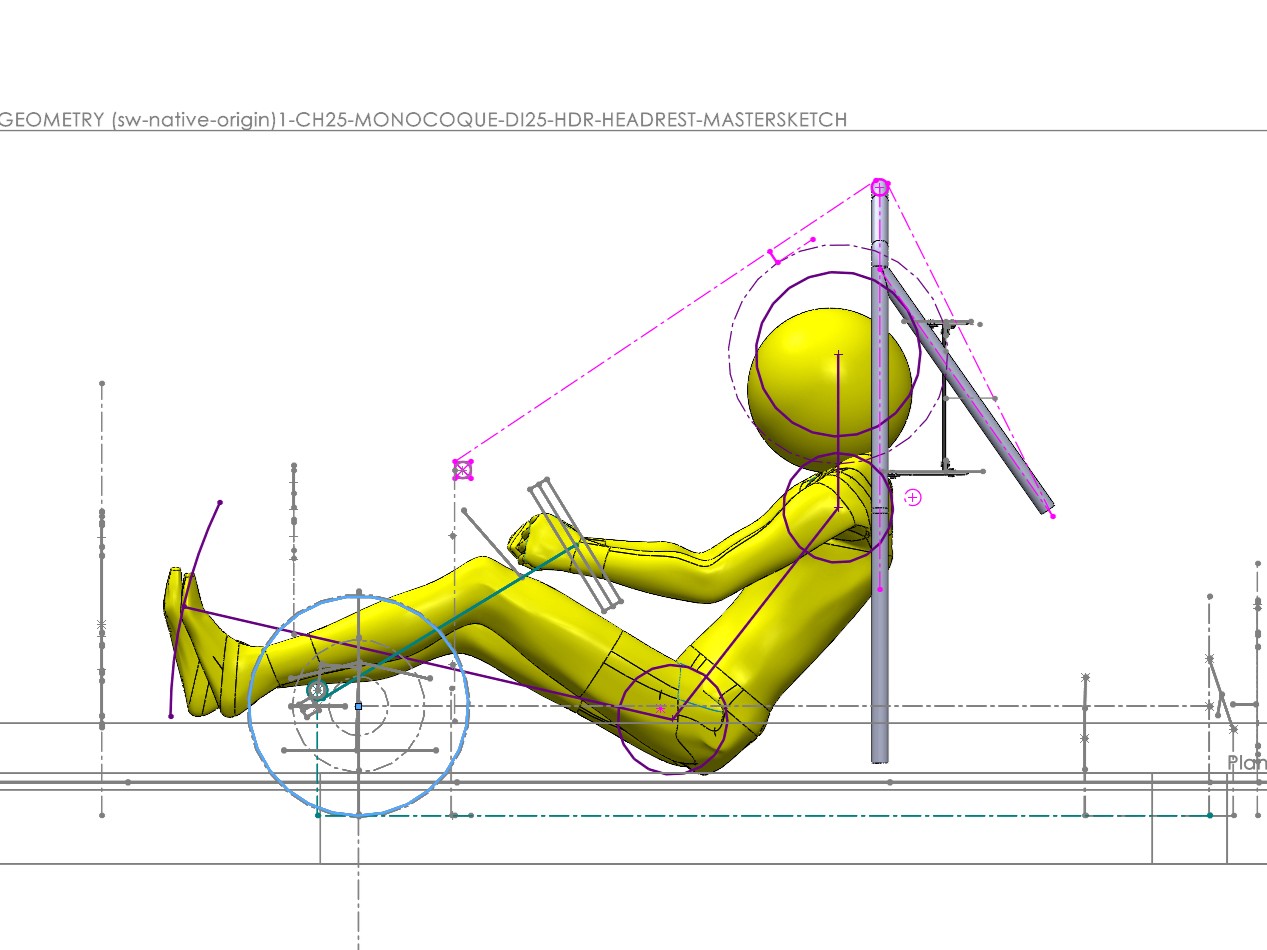
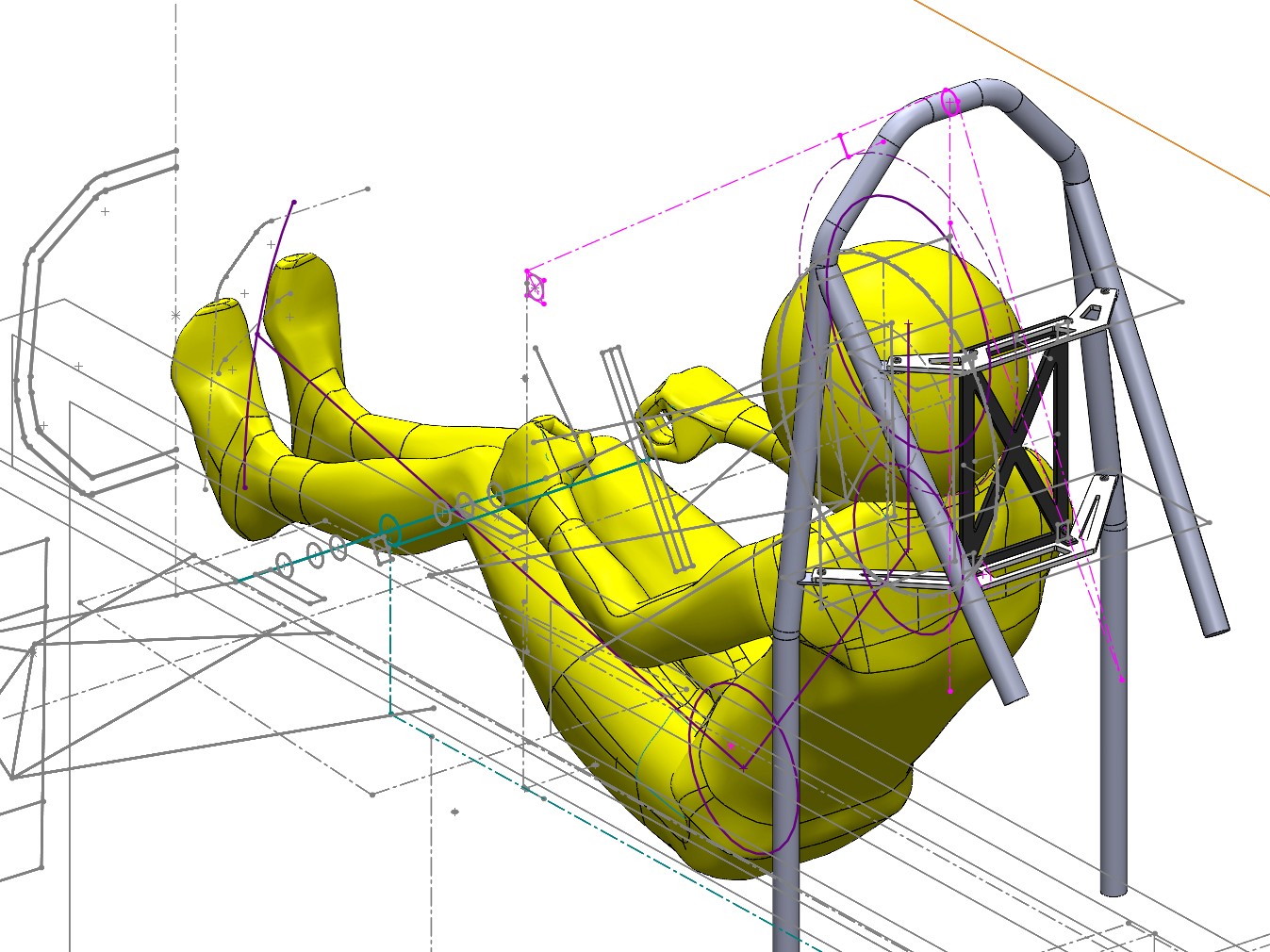
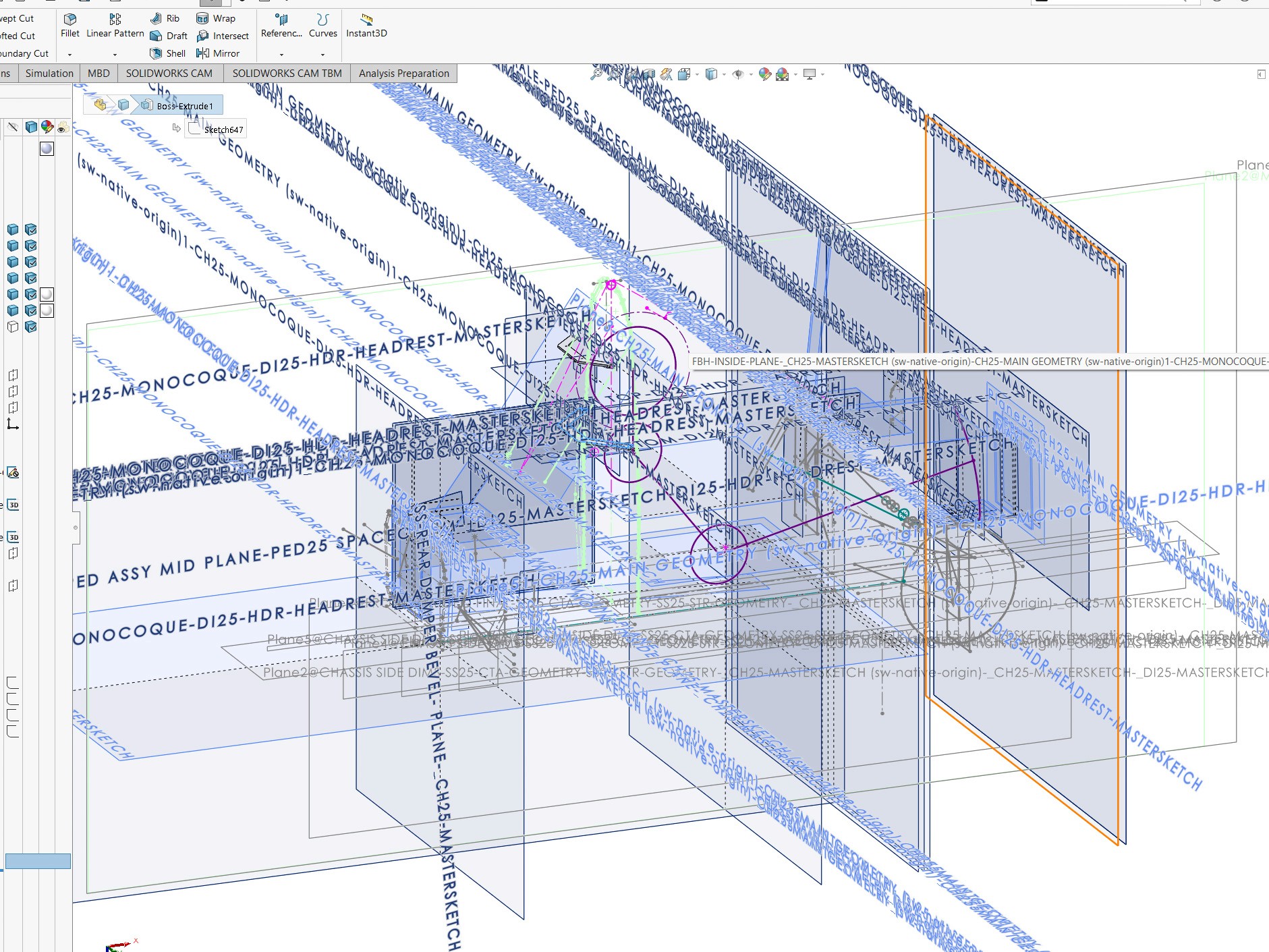
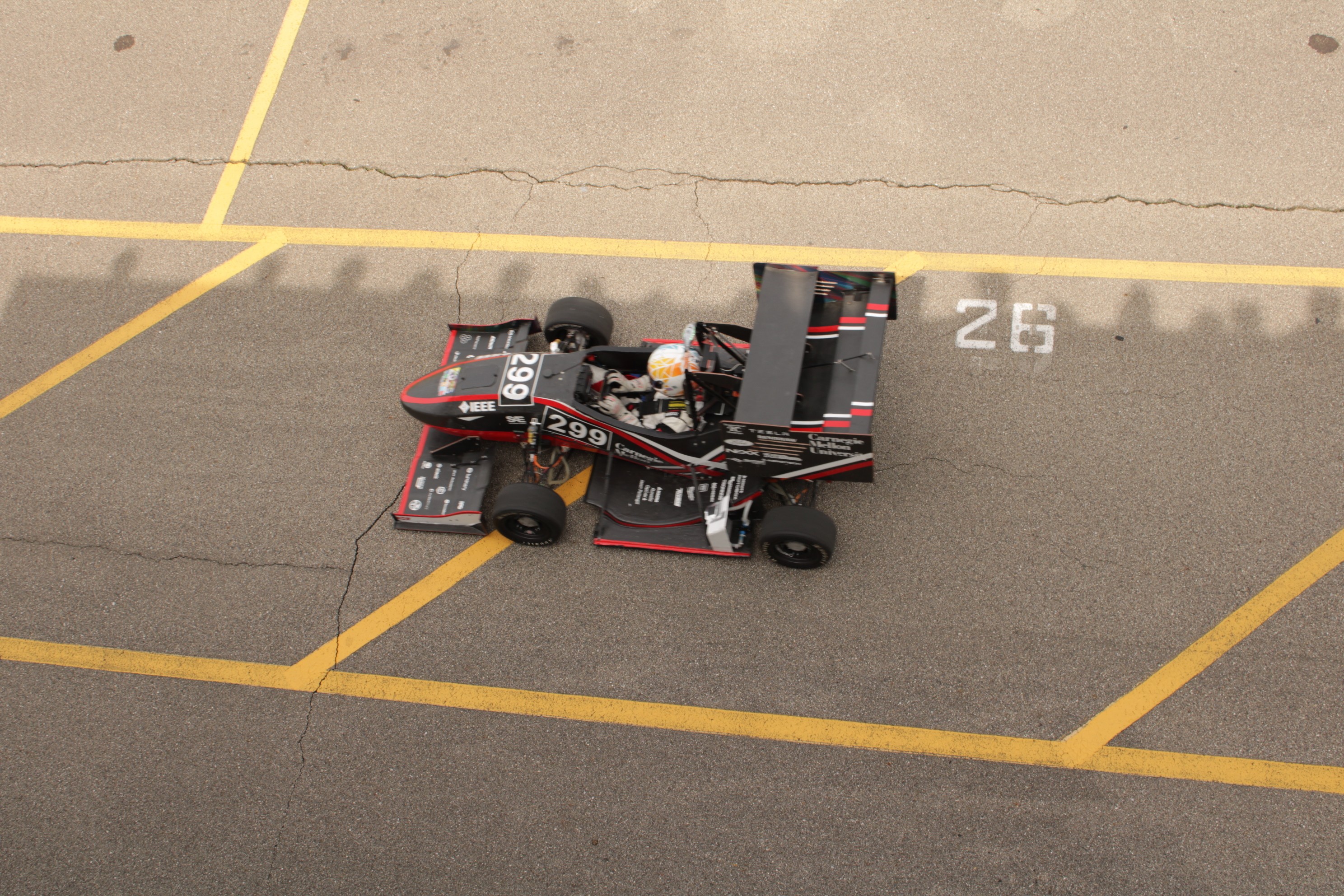
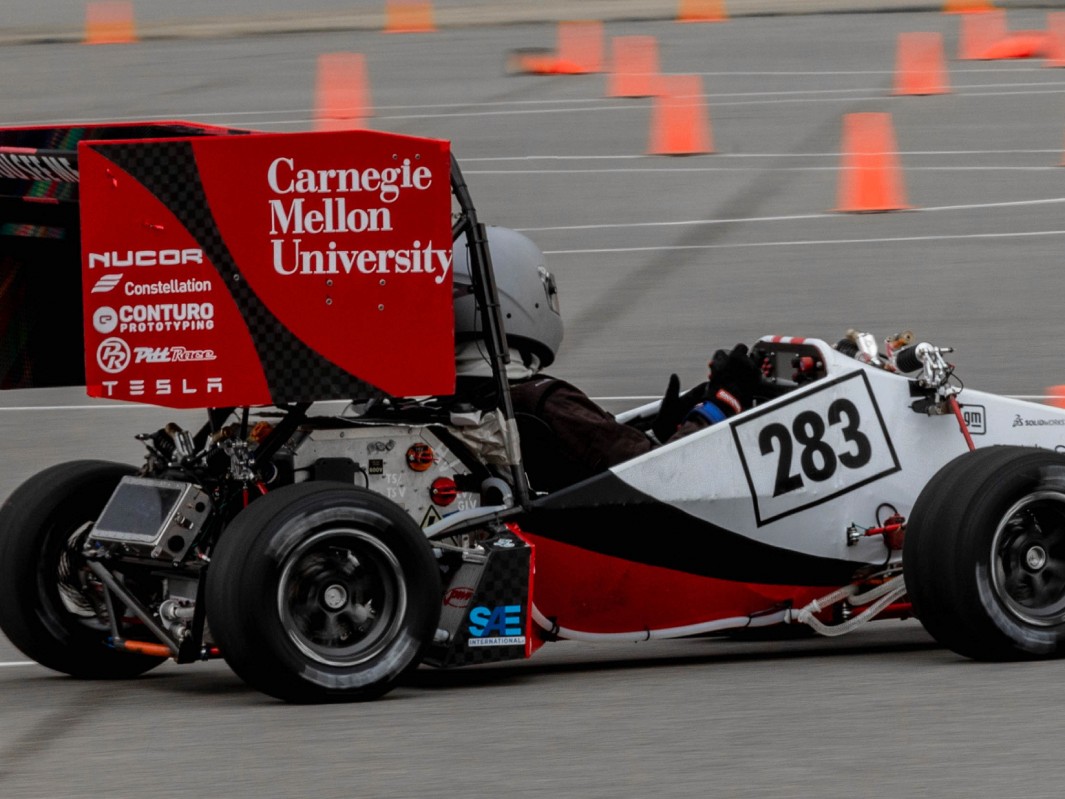
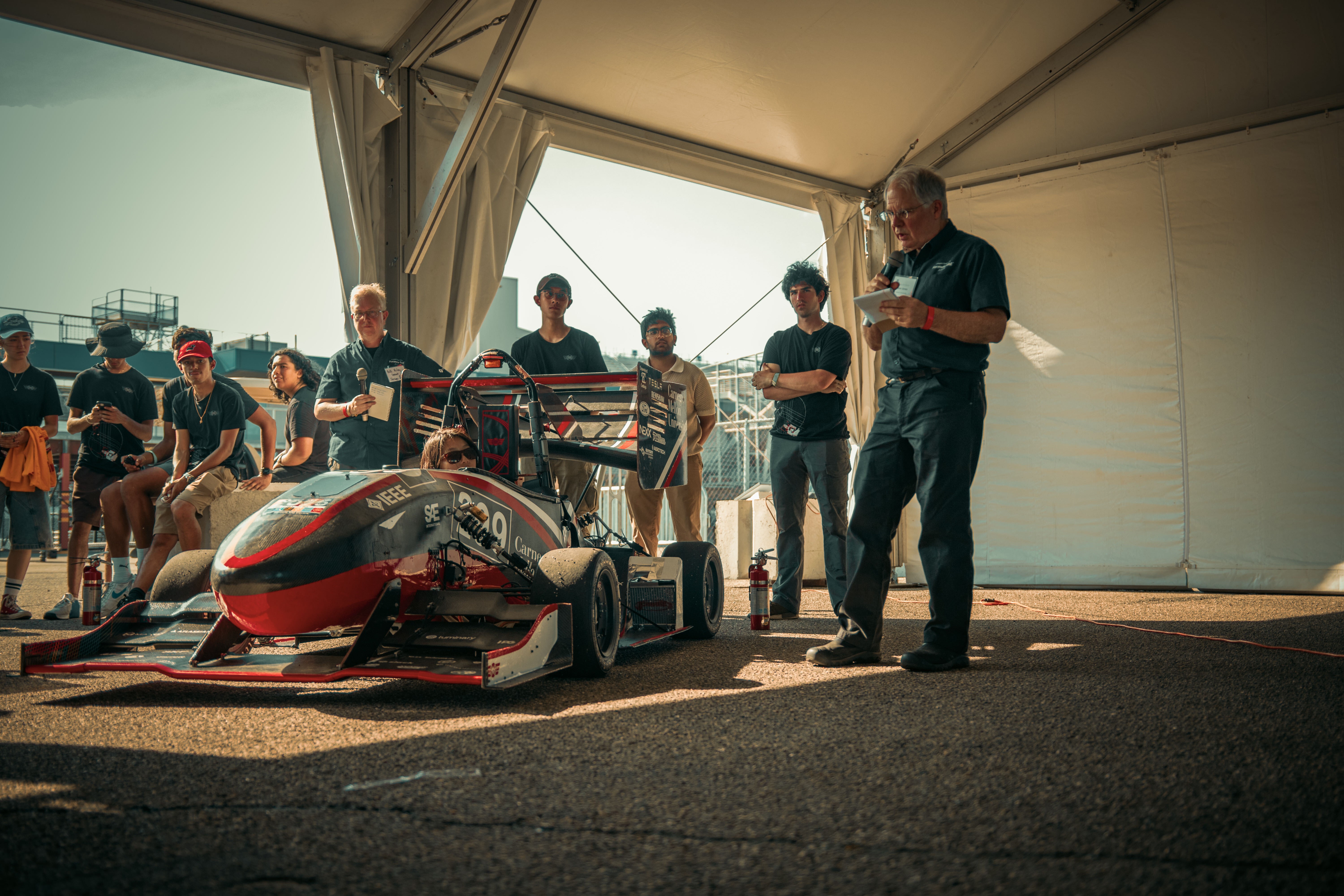
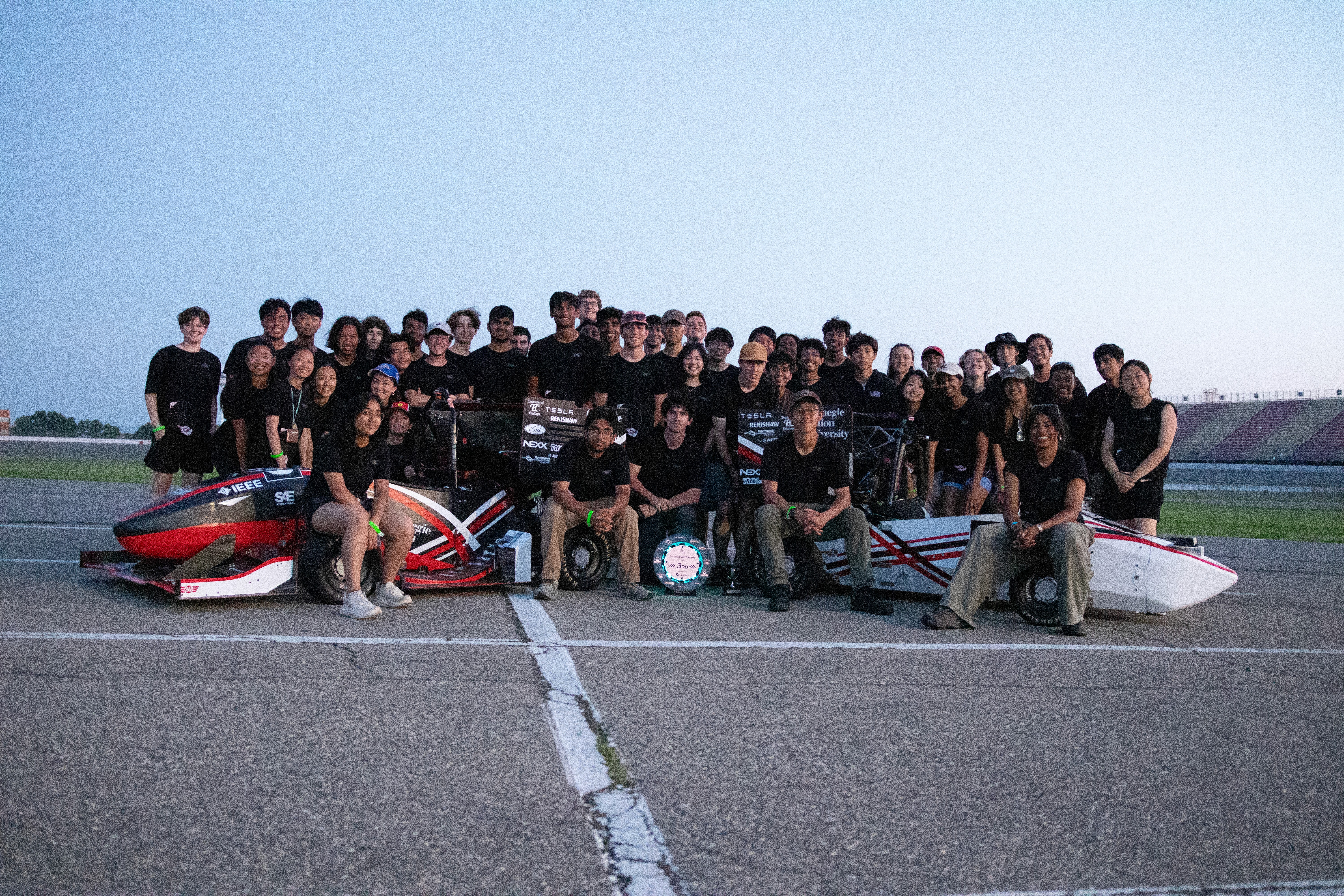
The headrest achieved a 50% weight reduction compared to the previous model while increasing strength by 20%. The vehicle went on to place 2nd overall in design at competition.

© 2026 Kevin Xu