Not all dining happens at rest.
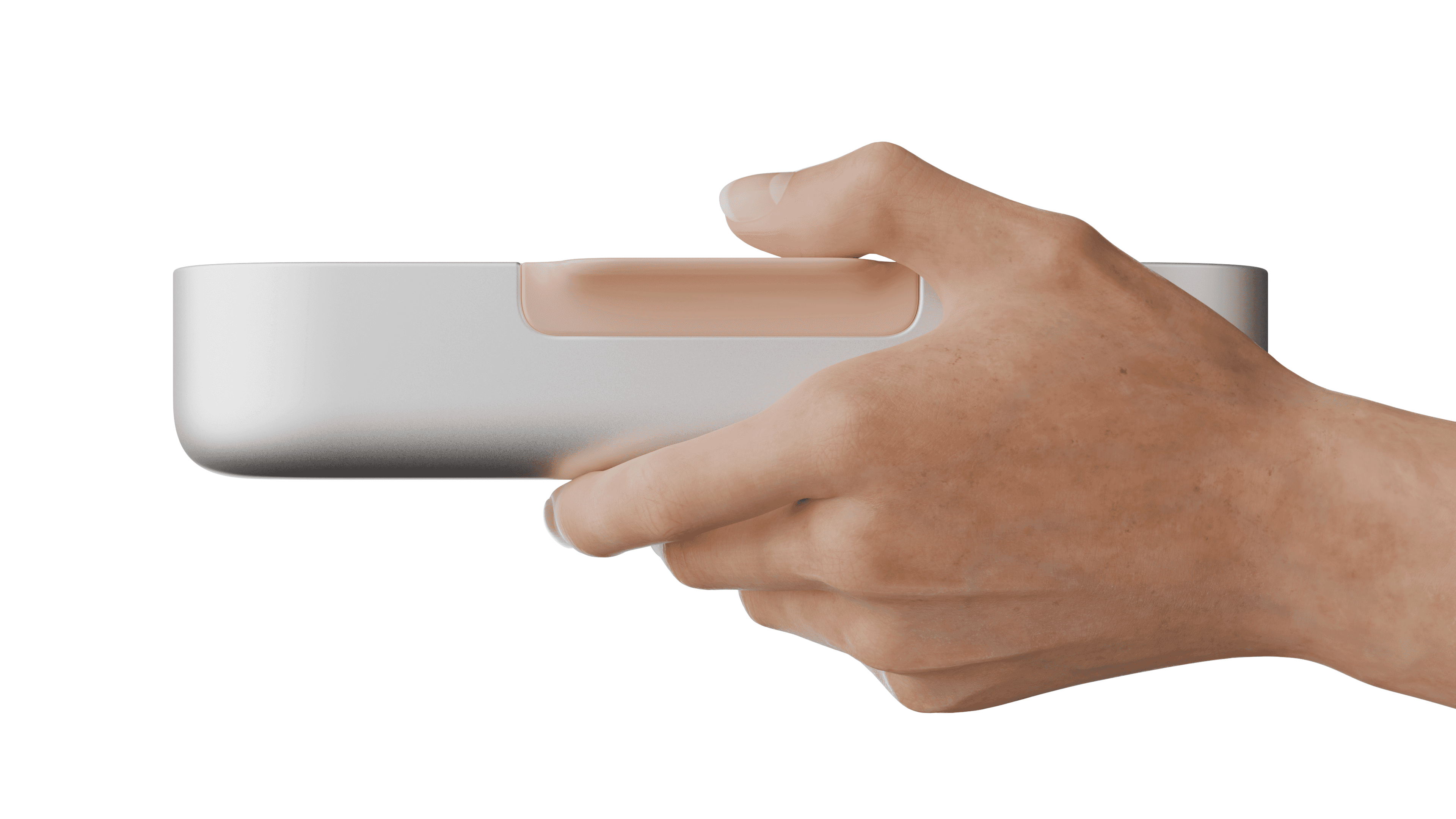
Habit
Overview
Habit is a modular lunch system designed for in-car eating. The car has become a third space for many, as people on average spend one hour a day on the road. Habit emphasizes with the many people who eat in their car daily—at jobsites, on the side of the road, or in parking lots—elevating the experience of eating a healthy meal while on the go.
Timeline
6 weeks
Fall 2025
Skills
User-Centered Research
Surface Modeling
Prototyping
User Testing
"My work requires driving long distances everyday, which often means bringing a packed lunch."
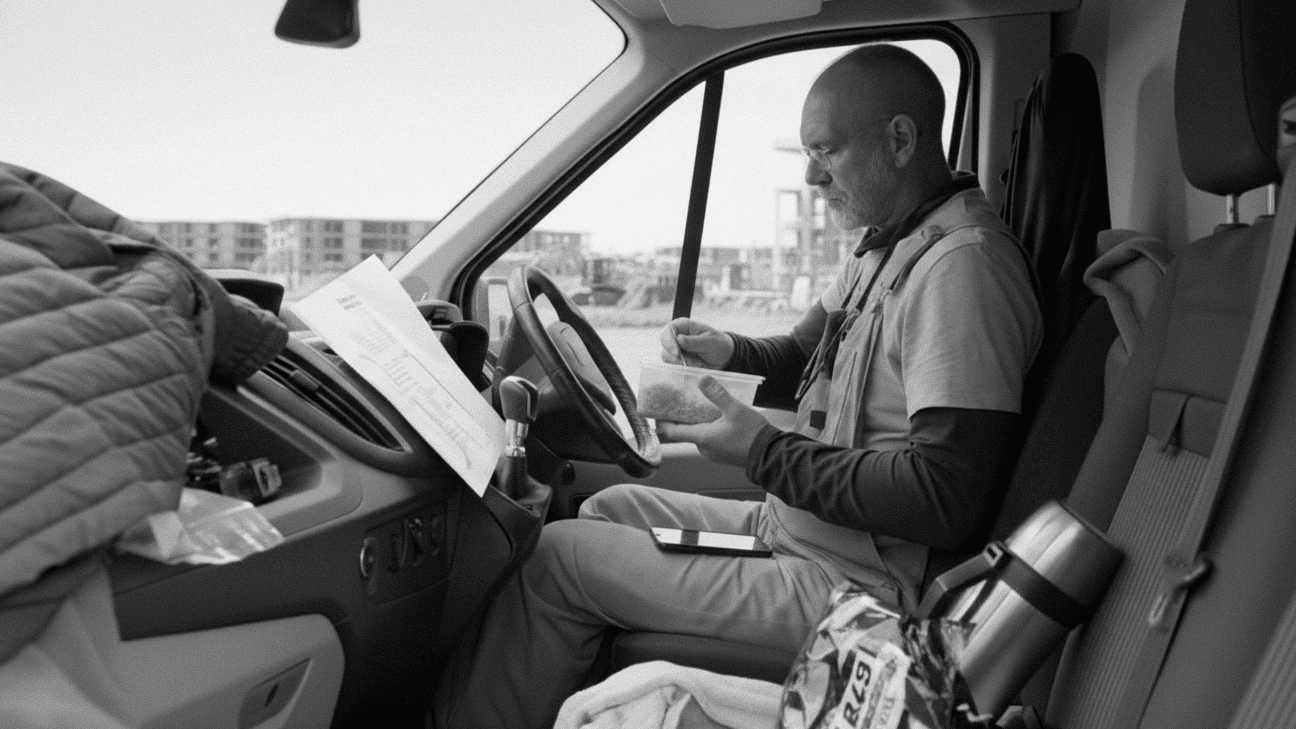
For many workers, eating in their vehicle is a job-required routine. It offers shelter from heat, dust, and noise, while also providing a quiet, personal space to decompress and enjoy moments of alone time.
A necessary but often dreaded task
People have negative attitudes towards in-car eating, and it's often a struggle to eat a complete meal in their cars with existing food containers. The messiness and the need for separate napkins and utensils often results in frustration, skipped meals, and unhealthy choices like granola bars or eating out.
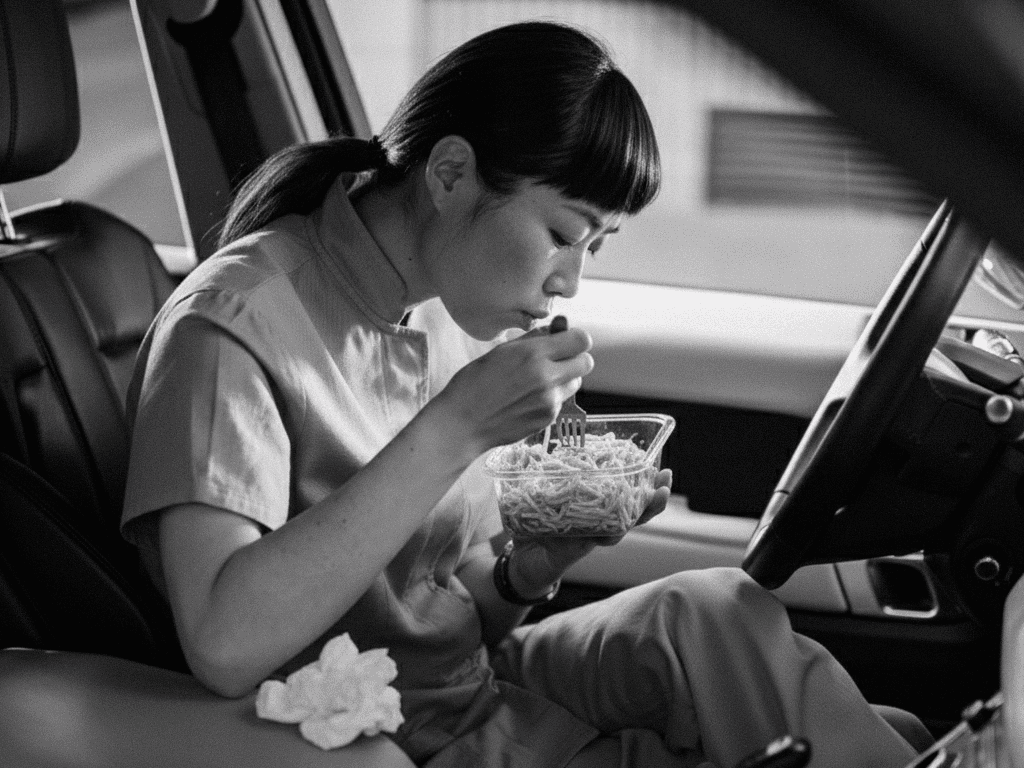
How might we design an in-car lunch experience that feels effortless, comfortable, and dignified for everyday use?
Synthesis of observational research and interview findings:
1.
Simplicity is key.
In a confined space, users fumble with all extra lids and utensils of their lunchbox.
2.
All in one.
Users want an everyday setup that comes with everything they need and matches their exact needs.
3.
Mess prevention.
Some expressed hesitations about eating in their car more regularly due to risk of spillage.
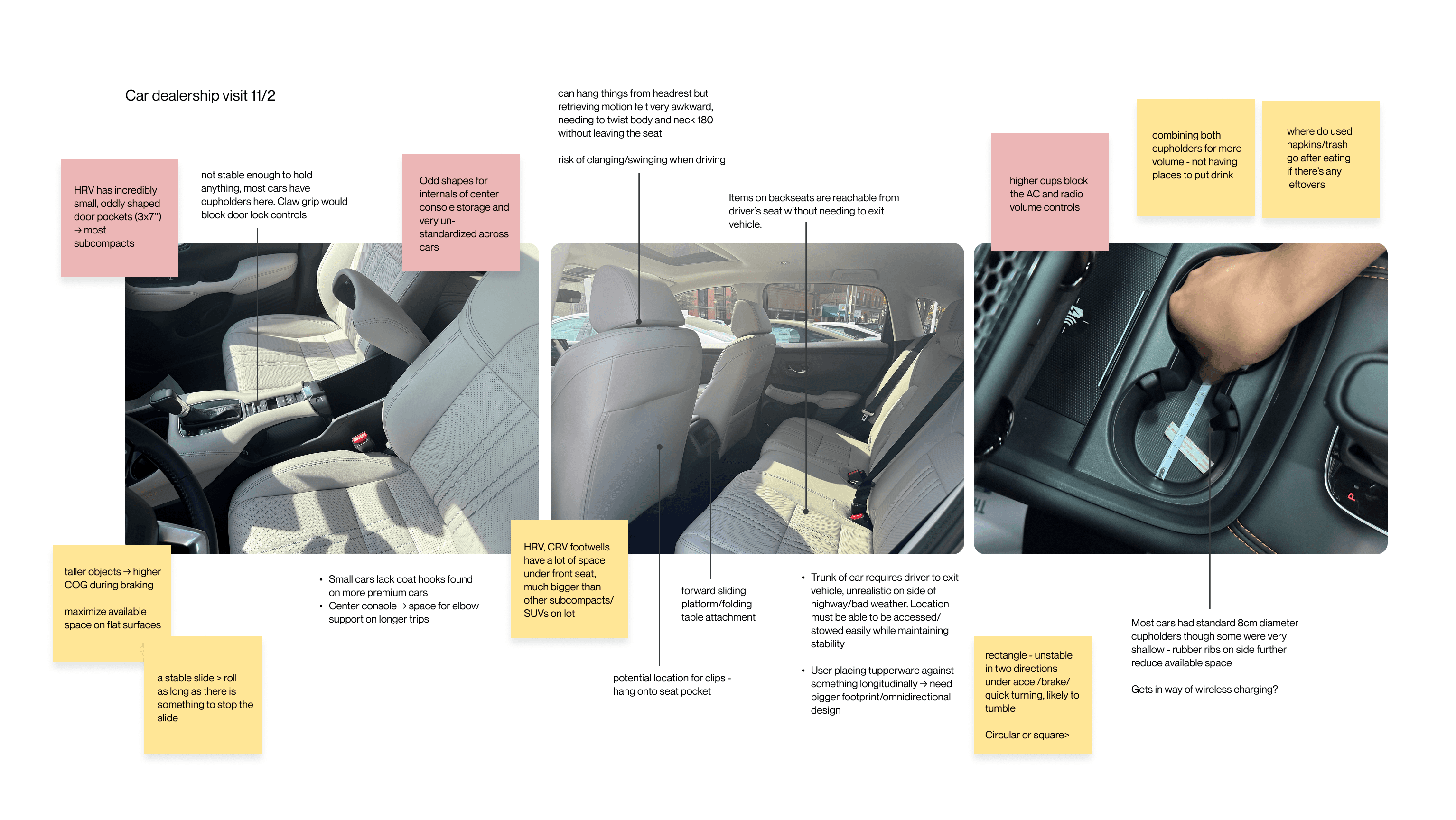
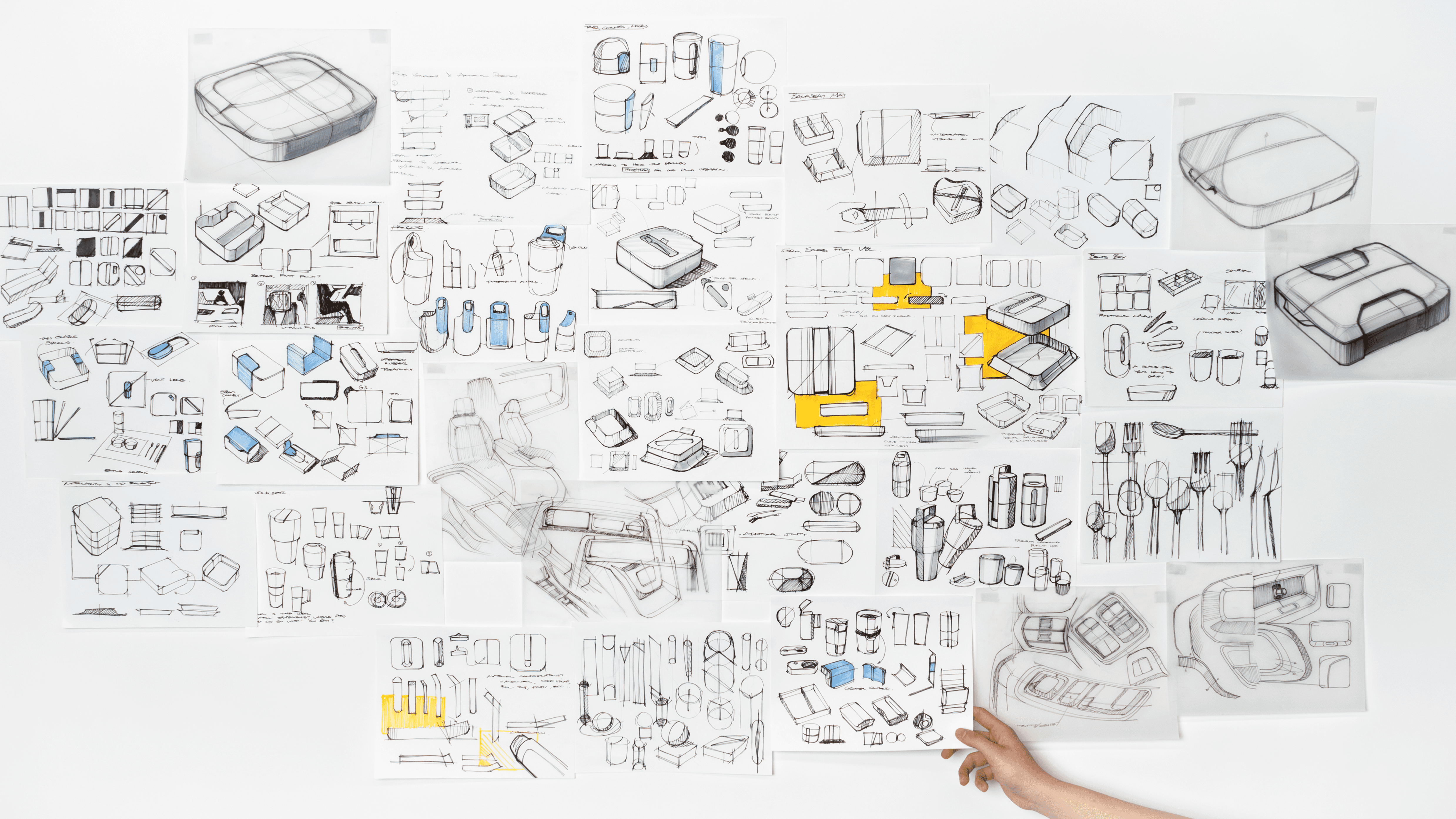
Understanding behavior through user testing
Equipped with insights from user interviews, I created low fidelity prototypes to explore new possibilities. Through user testing, these models further revealed underlying user behavior which helped narrow my solutions.
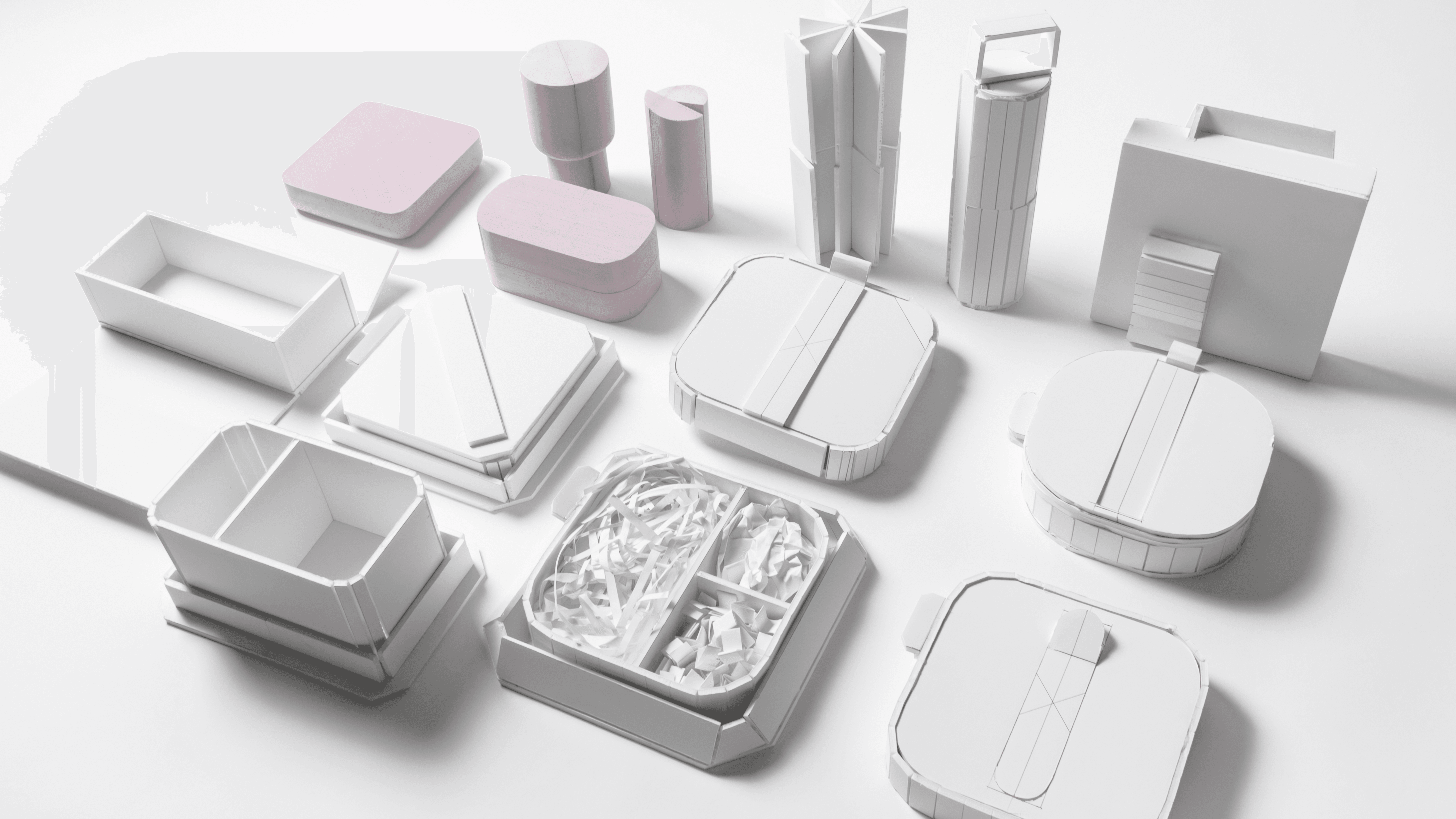
Testing early concepts with users who regularly eat in their car revealed...
Relying on their lap, people often hunch over when eating, highlighting a need for ergonomic posture.
Despite high demand from people eating on the go, no lunchbox combines insulation and reheating.
In moving vehicles, users need containers that are stable, stackable, and won’t shift or tip over.
Changes after testing
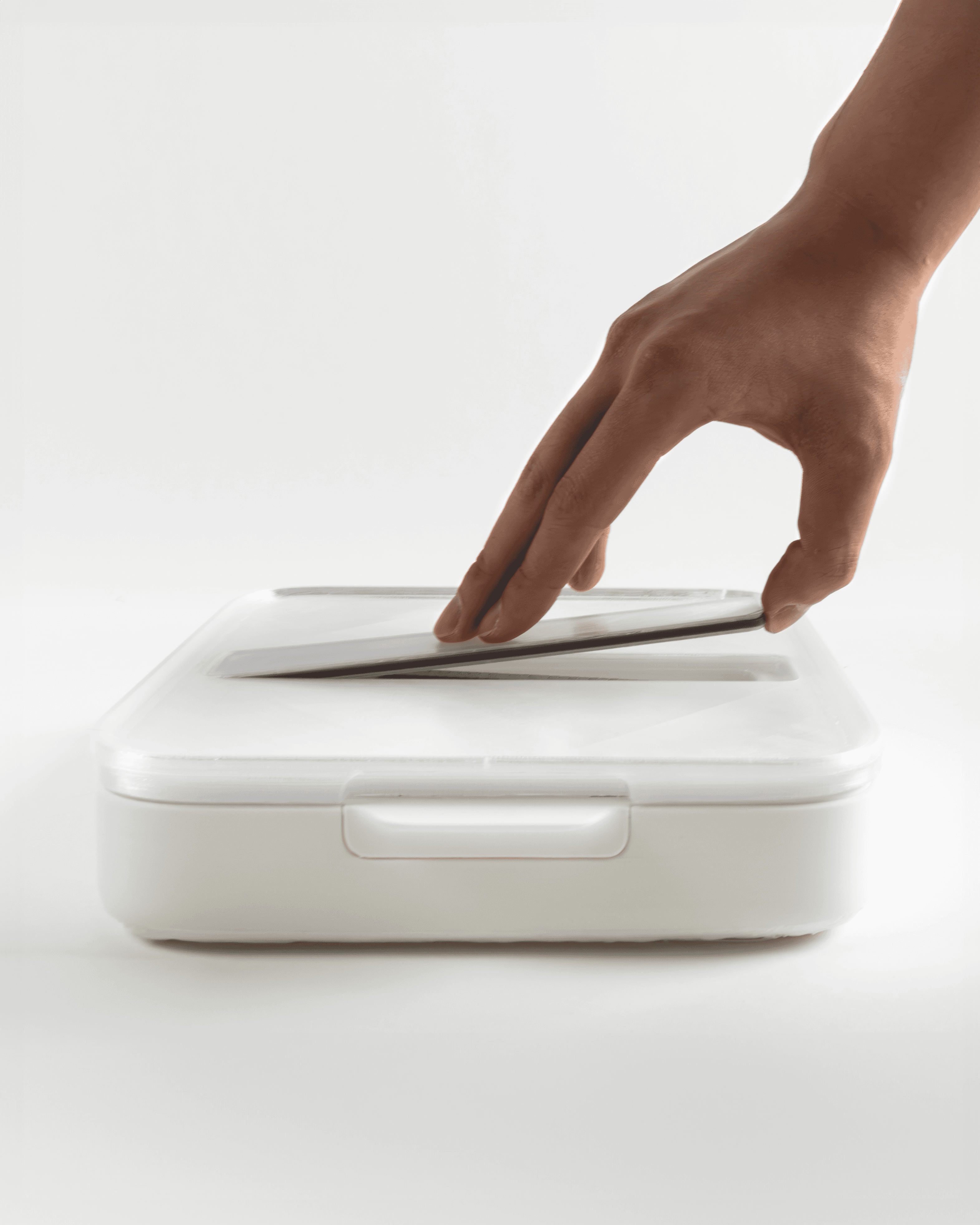
I observed that users had no way to isolate dirty utensils after eating, which led me to redesign the utensils to be stored internally while also accommodating a napkin.
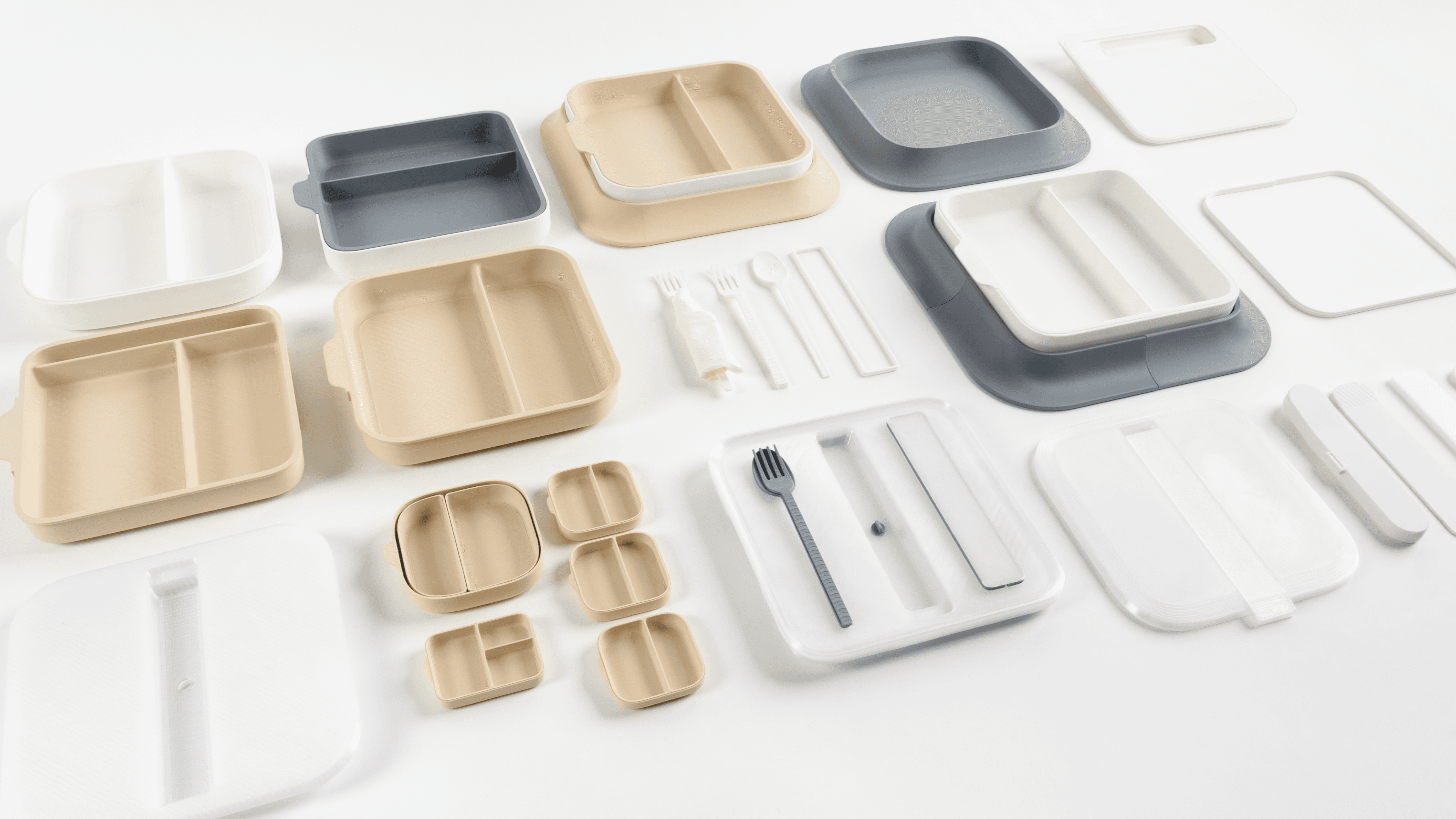
Iterating on form, proportion, and interaction using rapid-prototyping techniques.
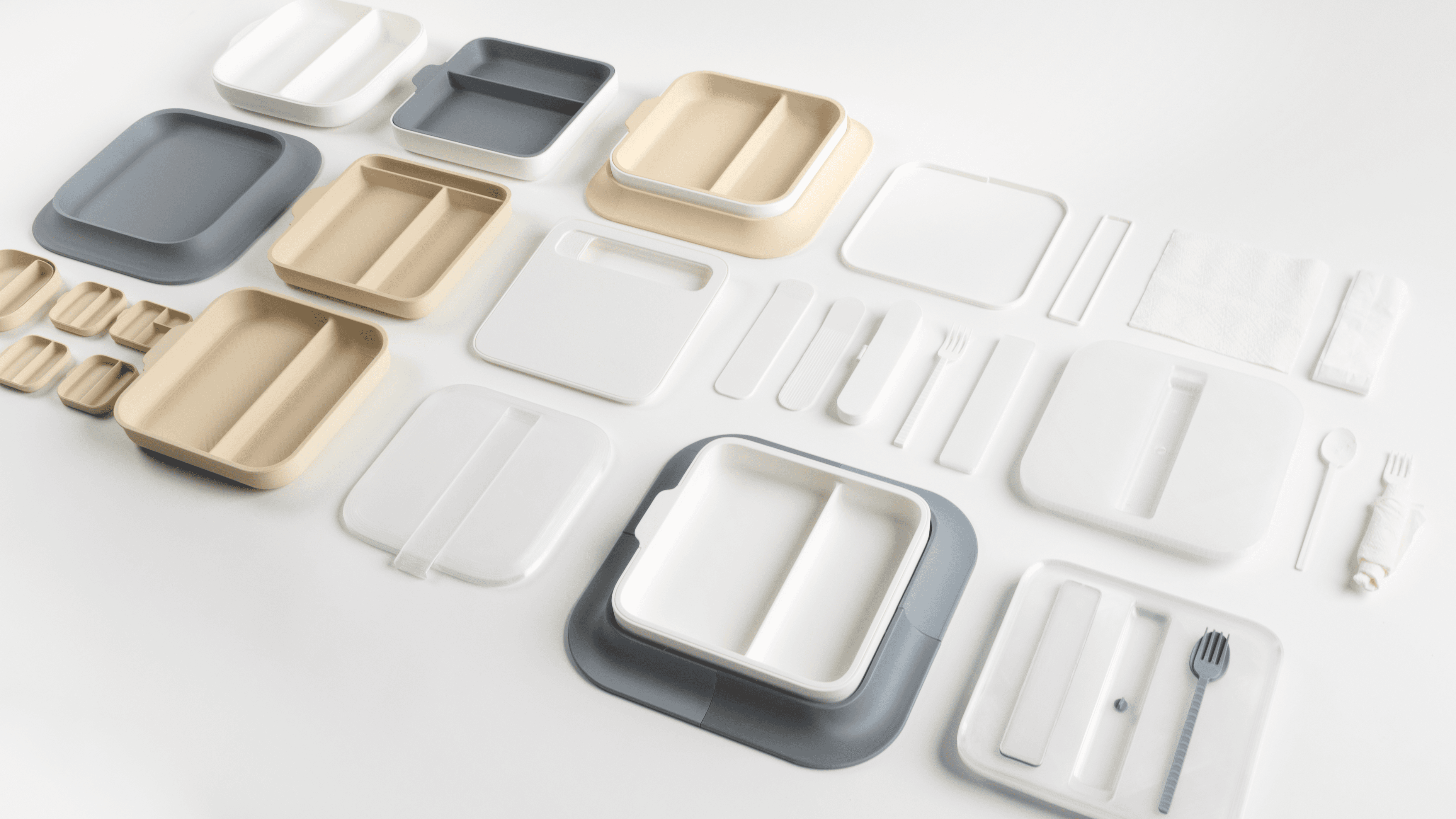
Designing for the whole experience, from prepping to cleaning
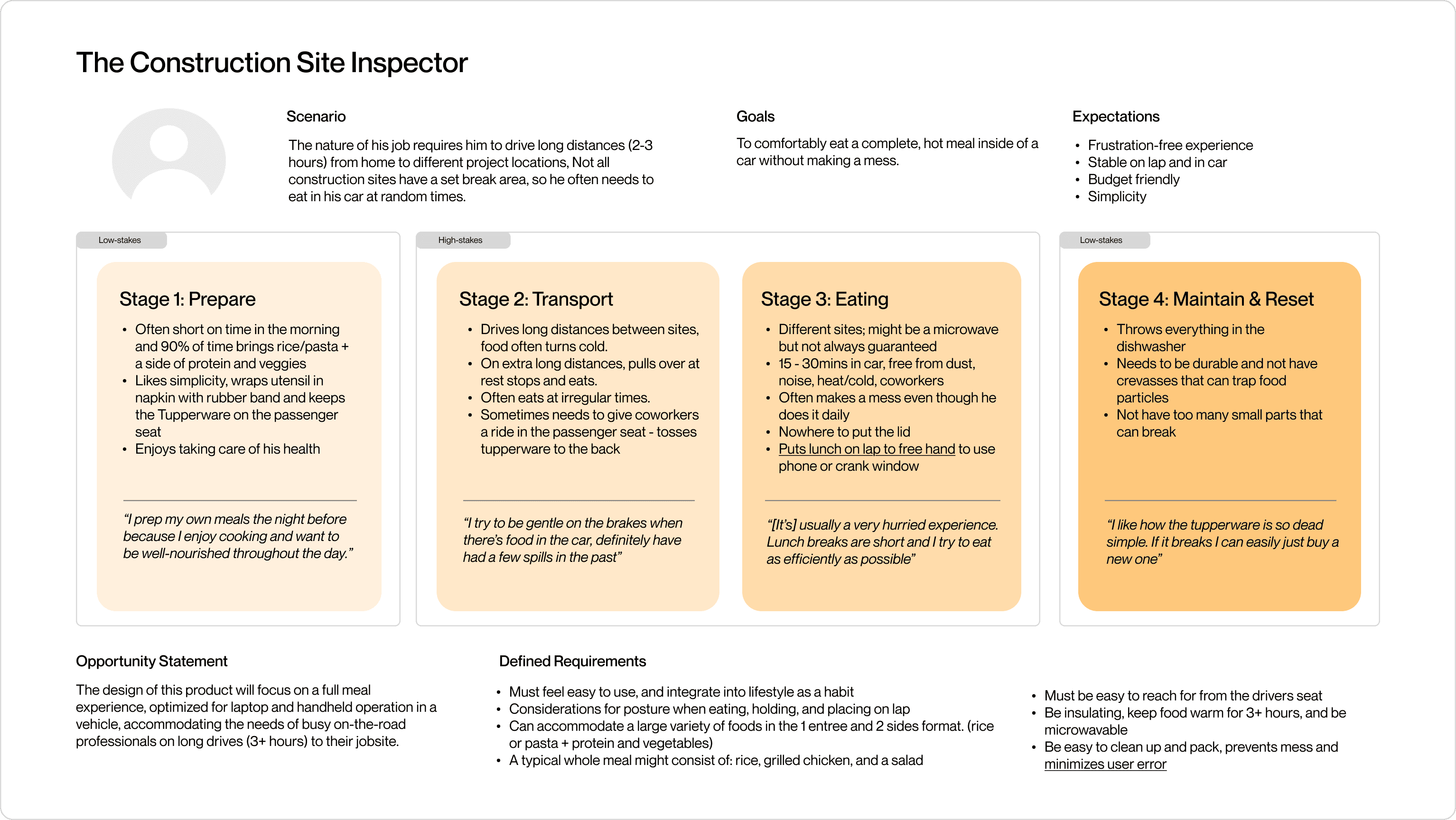
Eating lunch in a car is only one moment within a larger daily routine. By observing meal preparation, transport, and cleanup—not just in-car eating—I identified friction points across the full journey, leading me to further simplify the system to reduce effort in everyday use and cleaning.

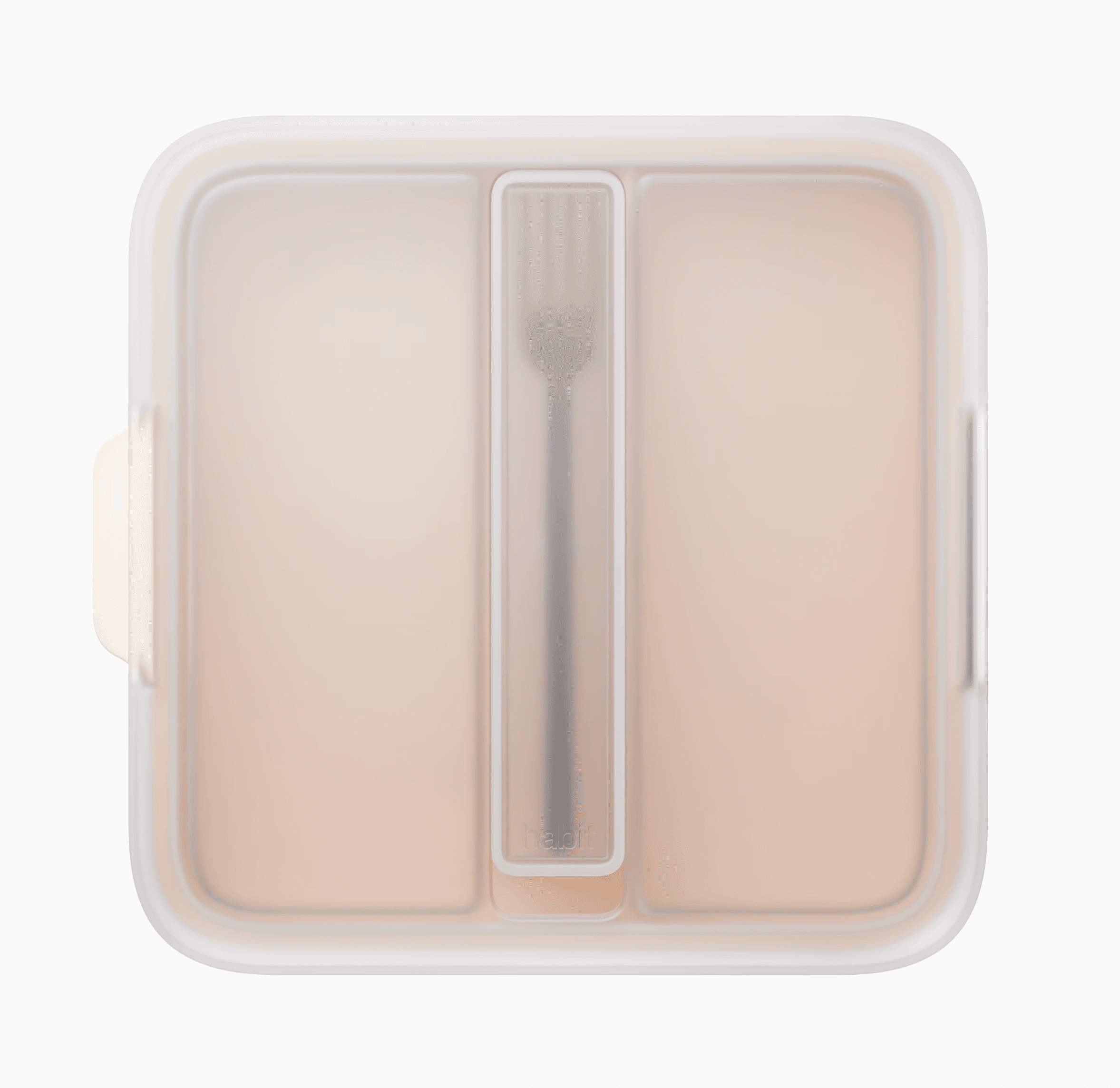
The Tab System
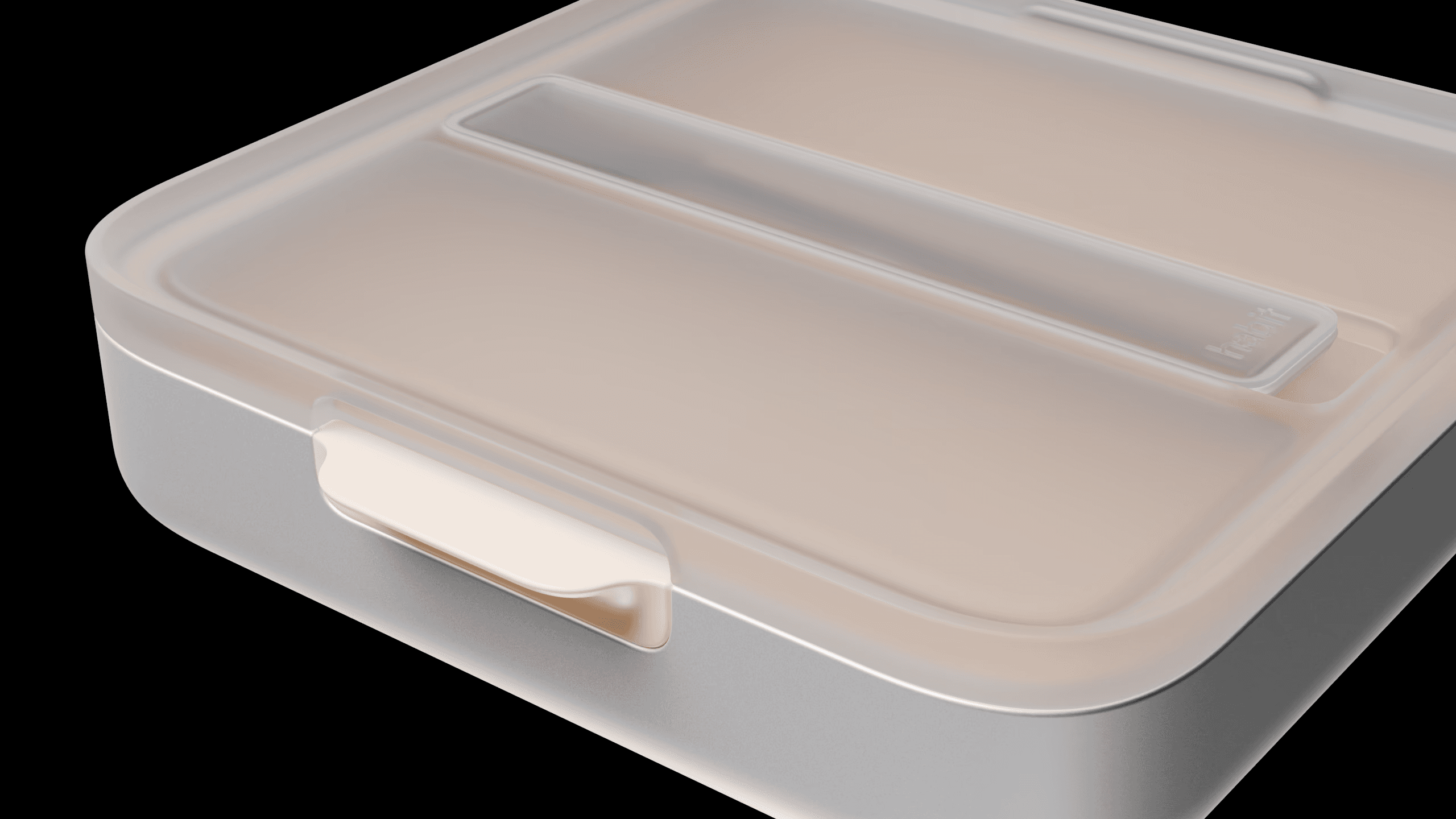
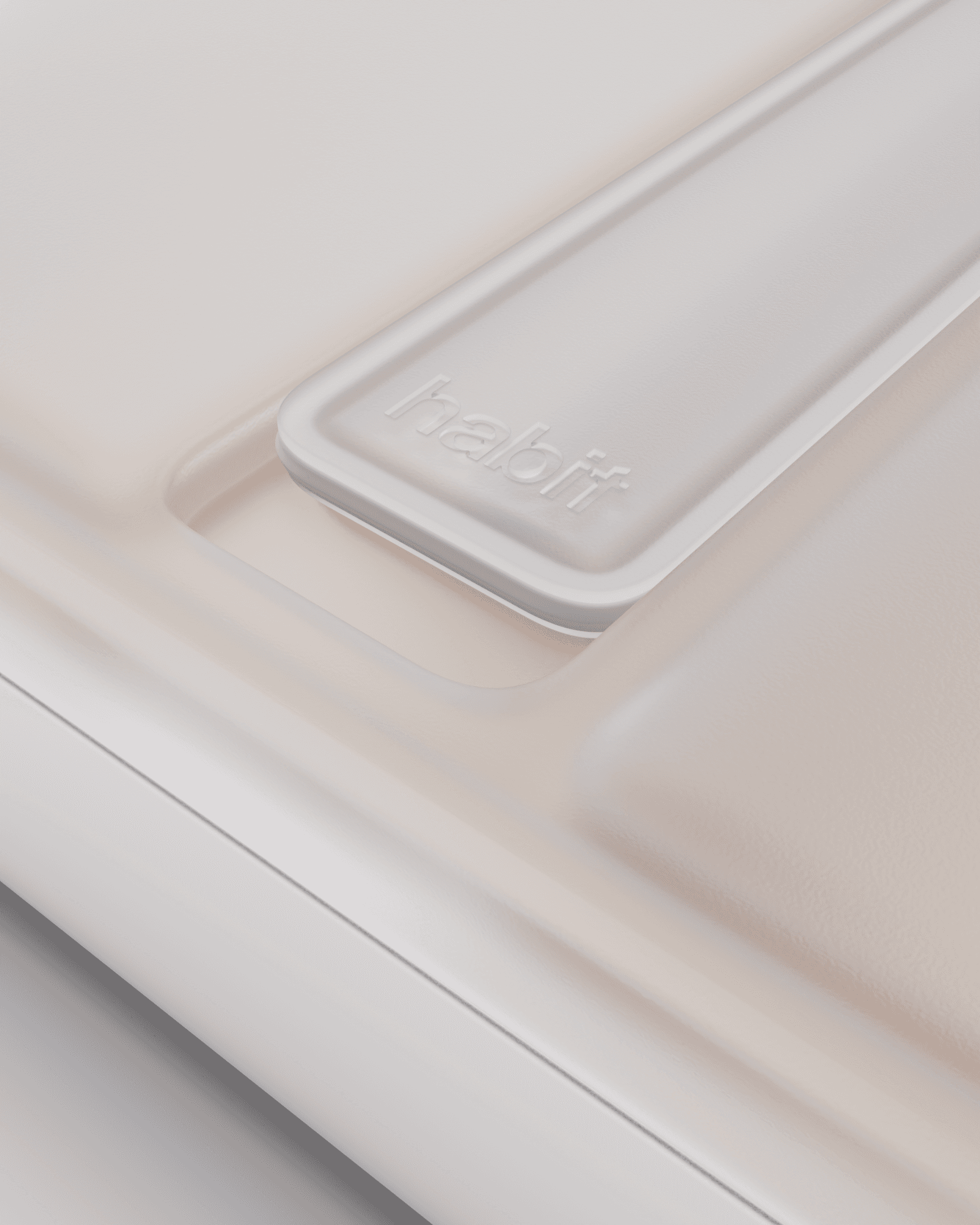
A subtle flange on the side of the insert provides a comfortable ledge for the thumb, so that holding the lunchbox up while eating feels much more secure—at any wrist angle.
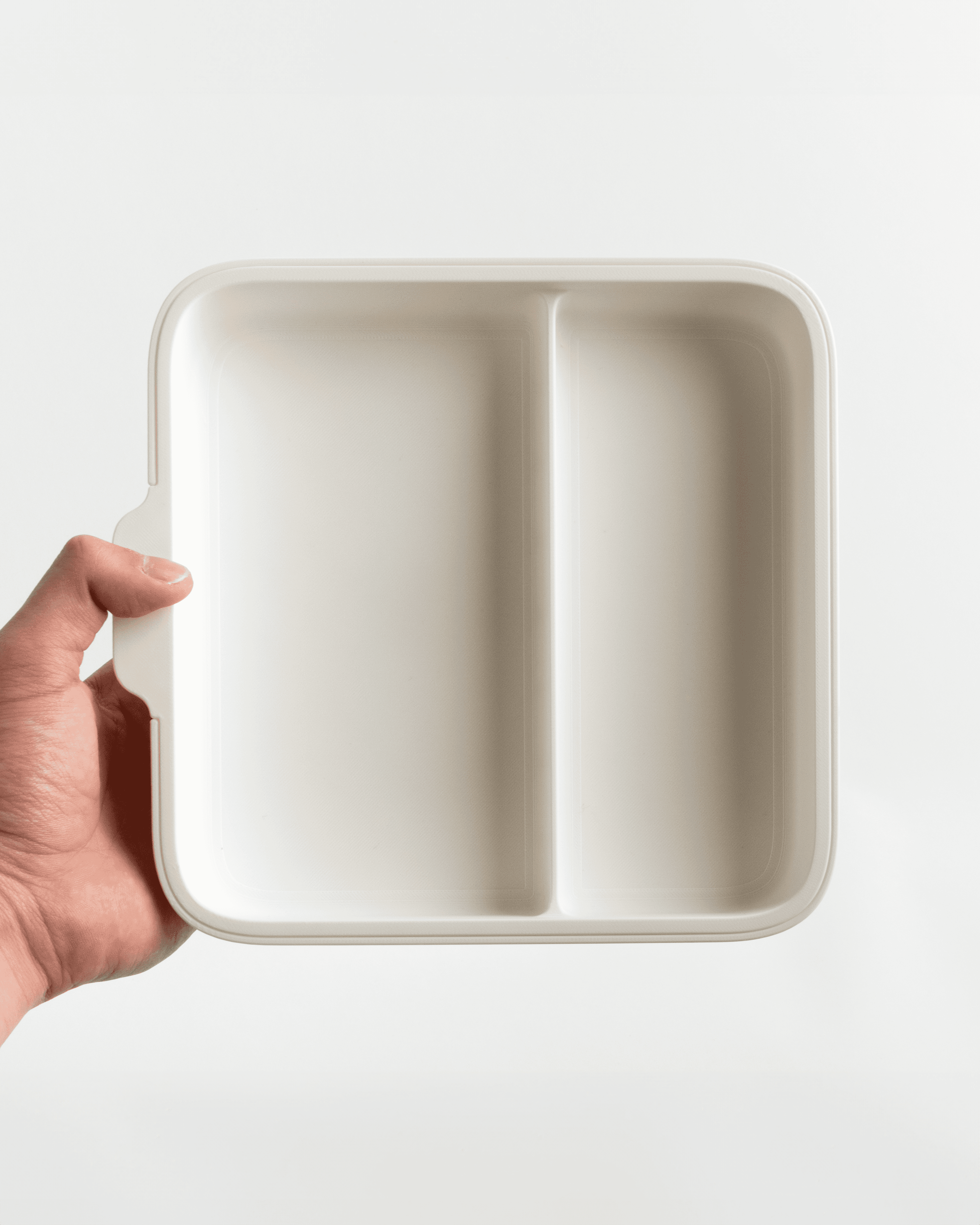
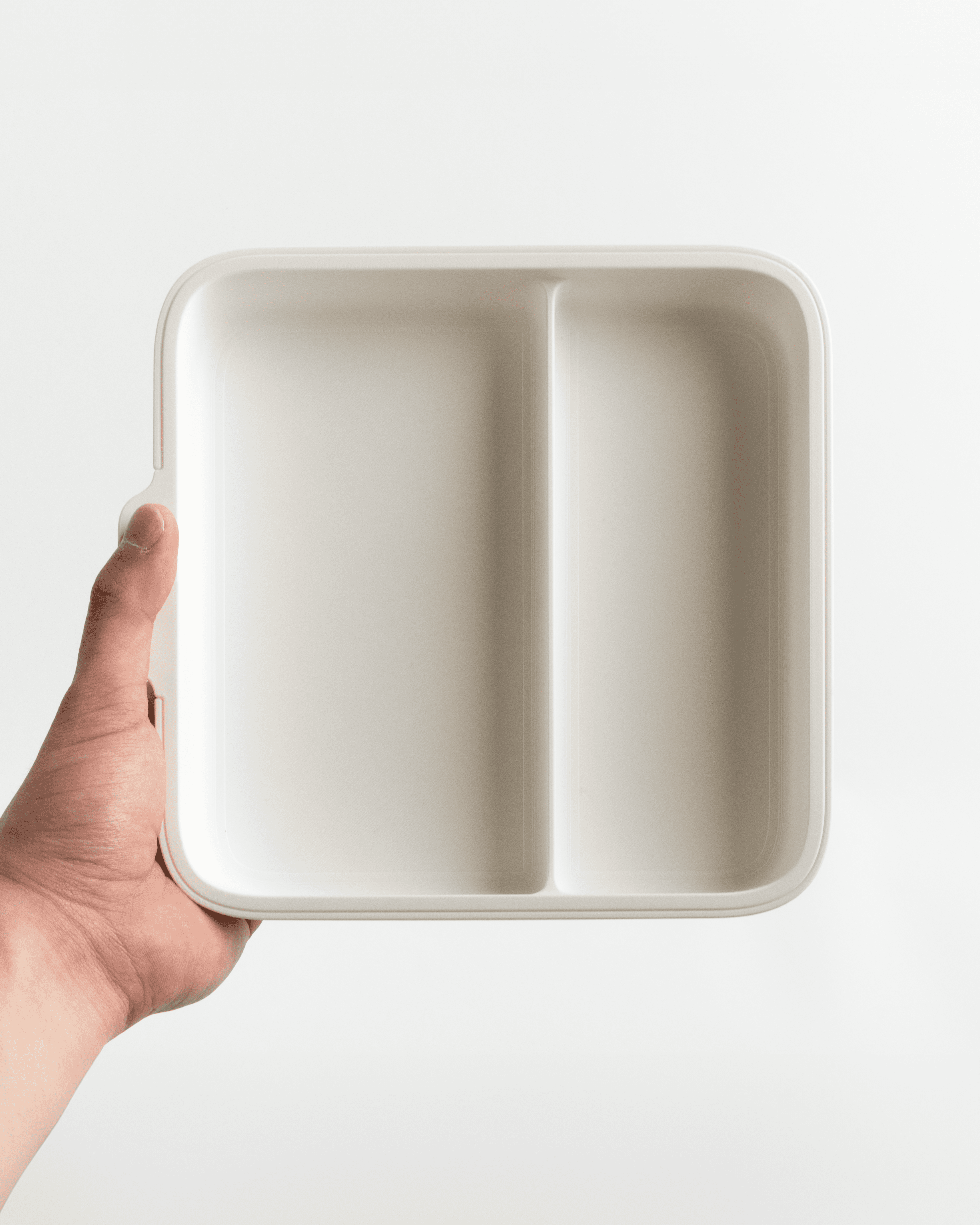
Insulating and Microwaveable
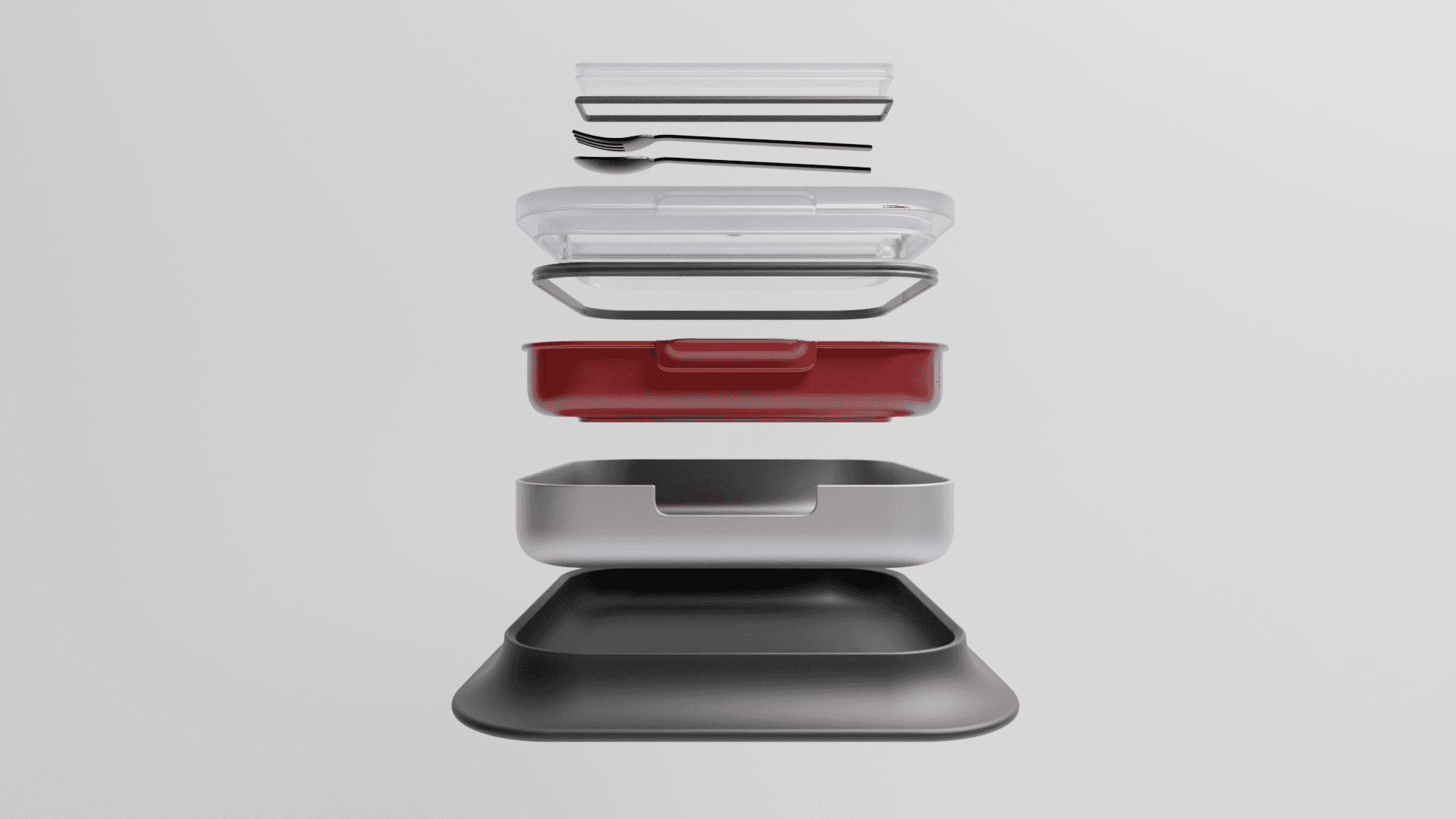
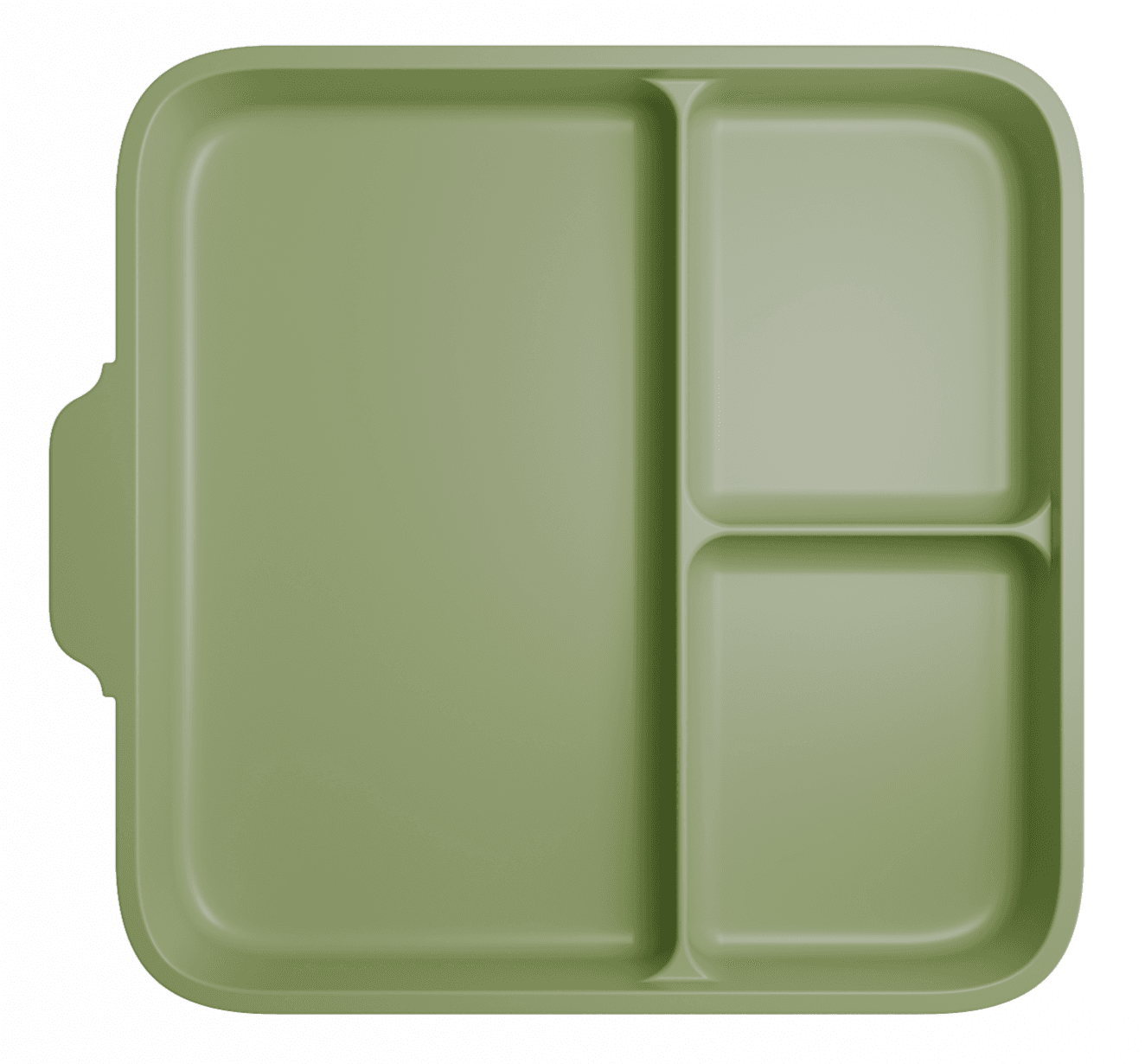
The polypropylene insert creates an insulating air gap between the aluminum outer casing, helping keep food warm while allowing for easy removal for reheating. An added benefit is the ability to customize compartments to suit the user’s specific needs and preferences.
Peace of mind
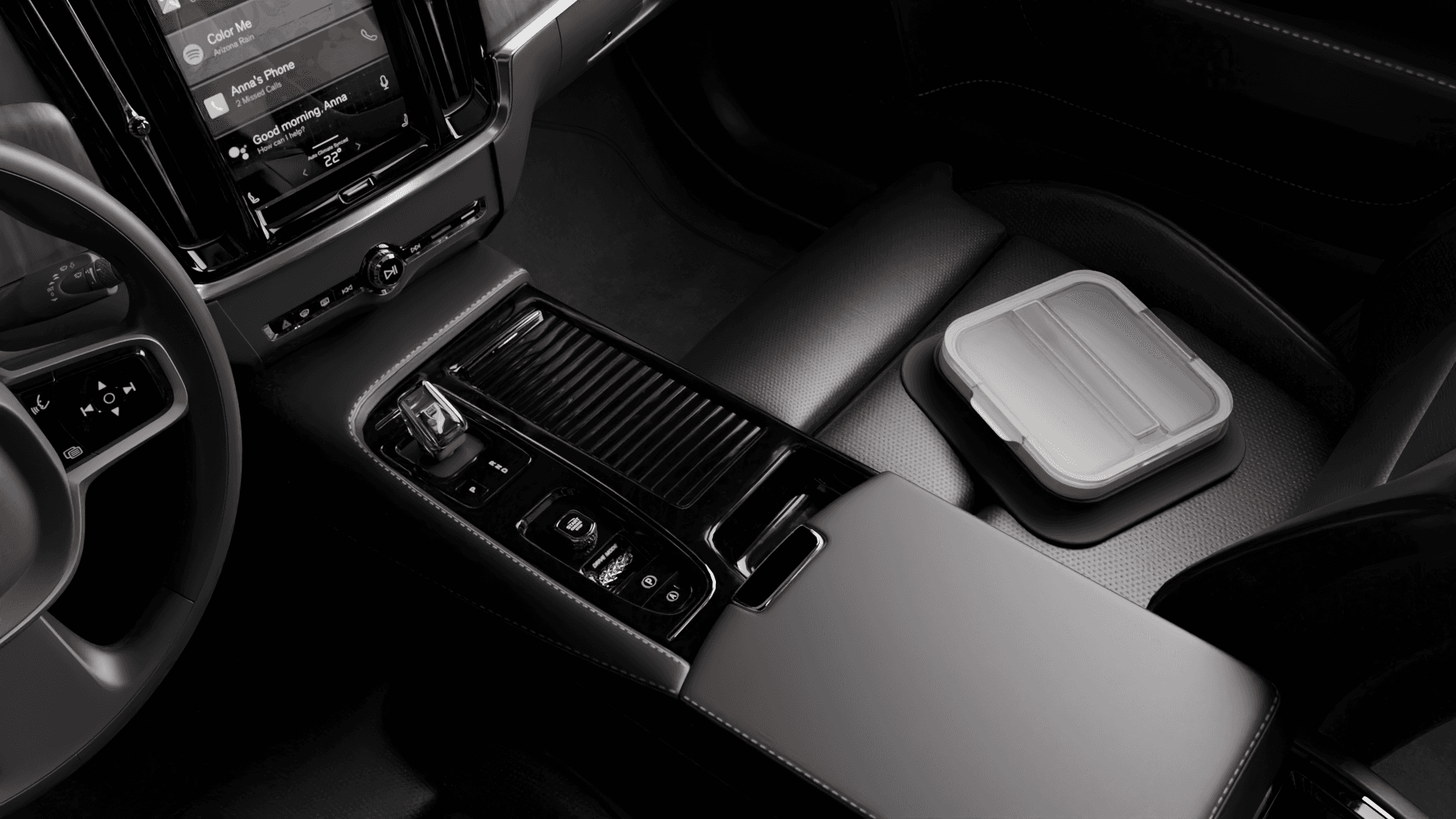
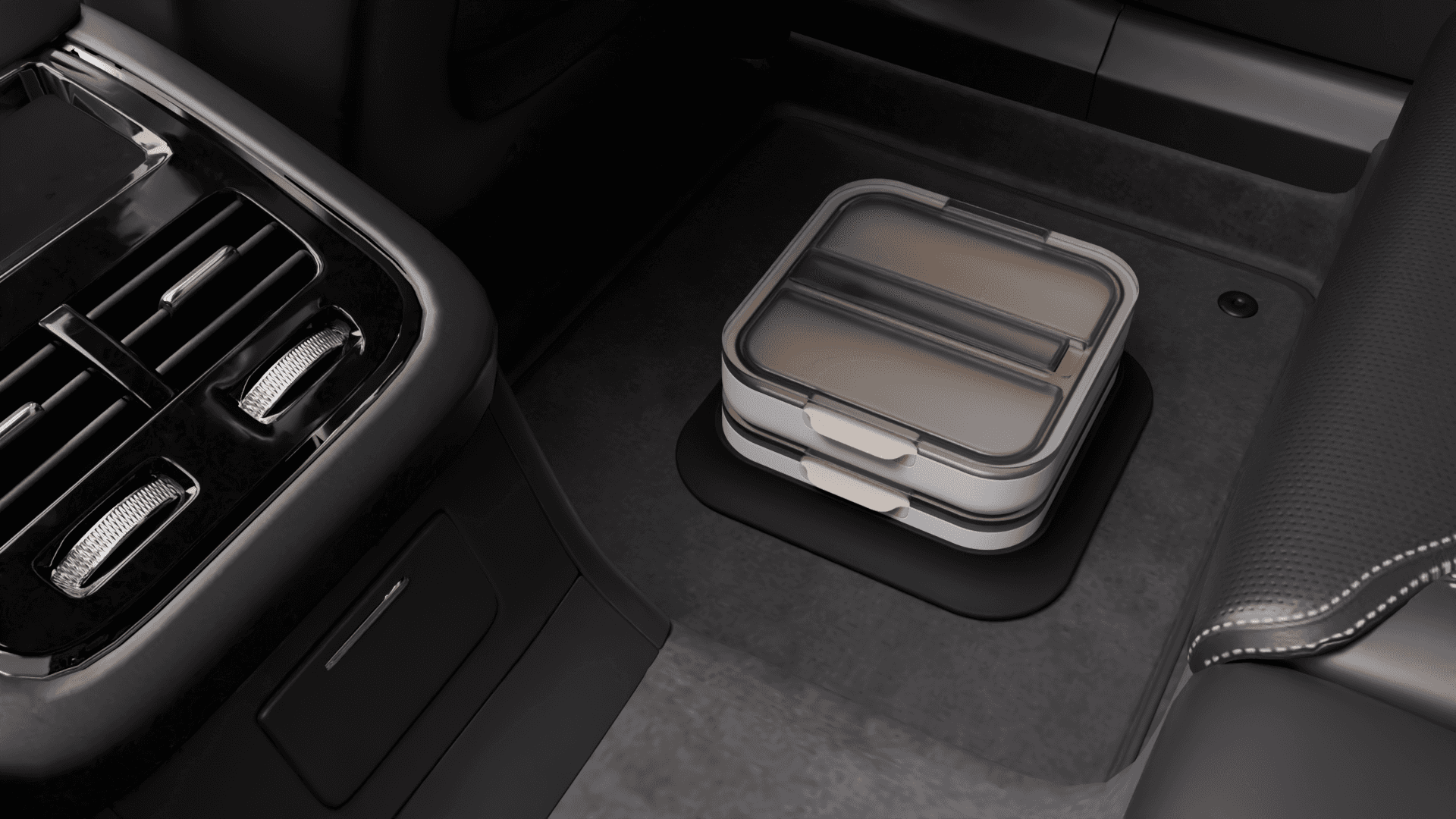
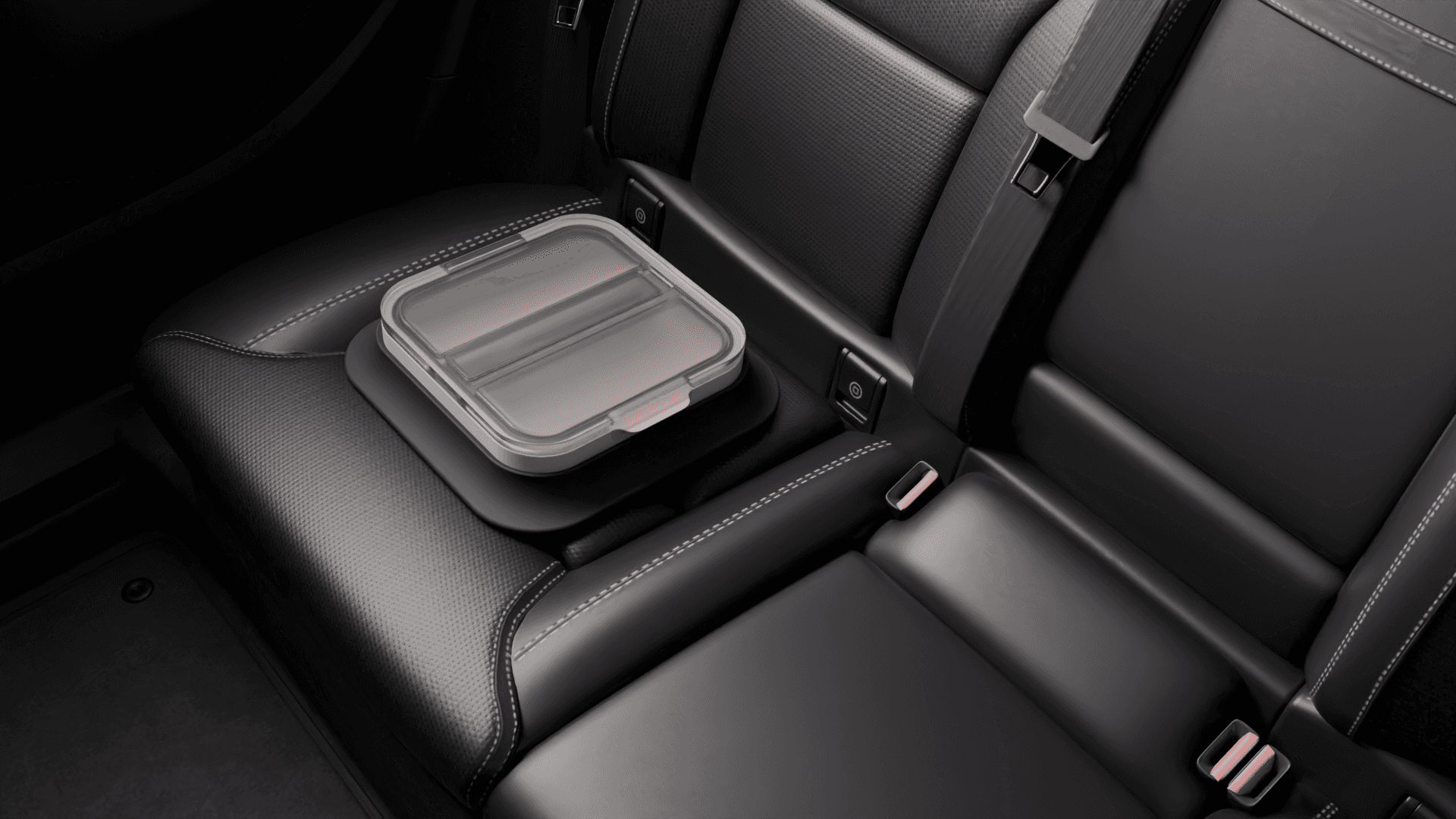
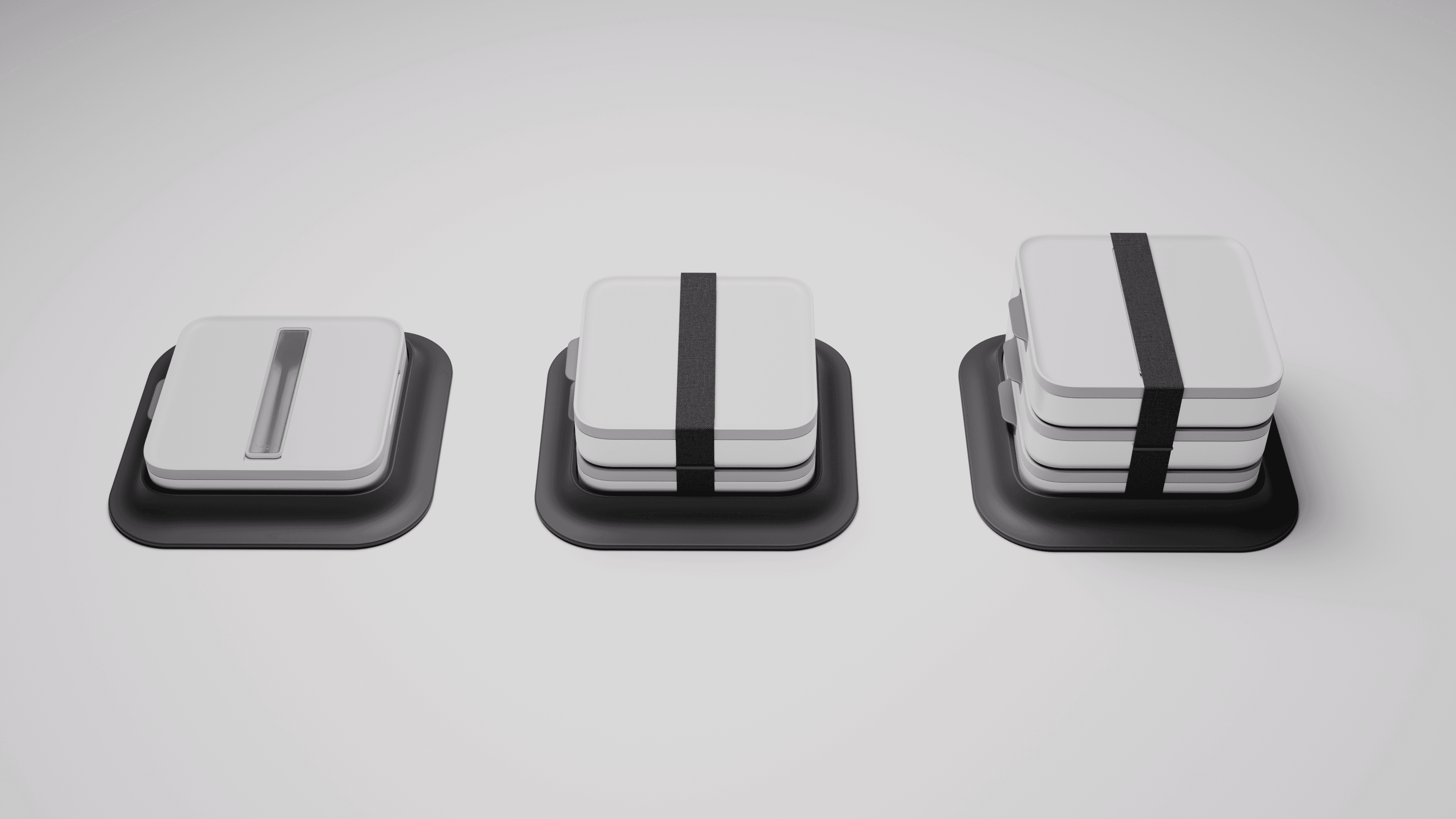
Molded silicone mat increases footprint of the lunchbox, preventing spills while driving and enabling stacking of up to three lunchboxes.

© 2026 Kevin Xu